Demurrage Charges: When to Pay and When to Push Back
Researched and written with AI assistance. Reviewed by the Laneproof team.
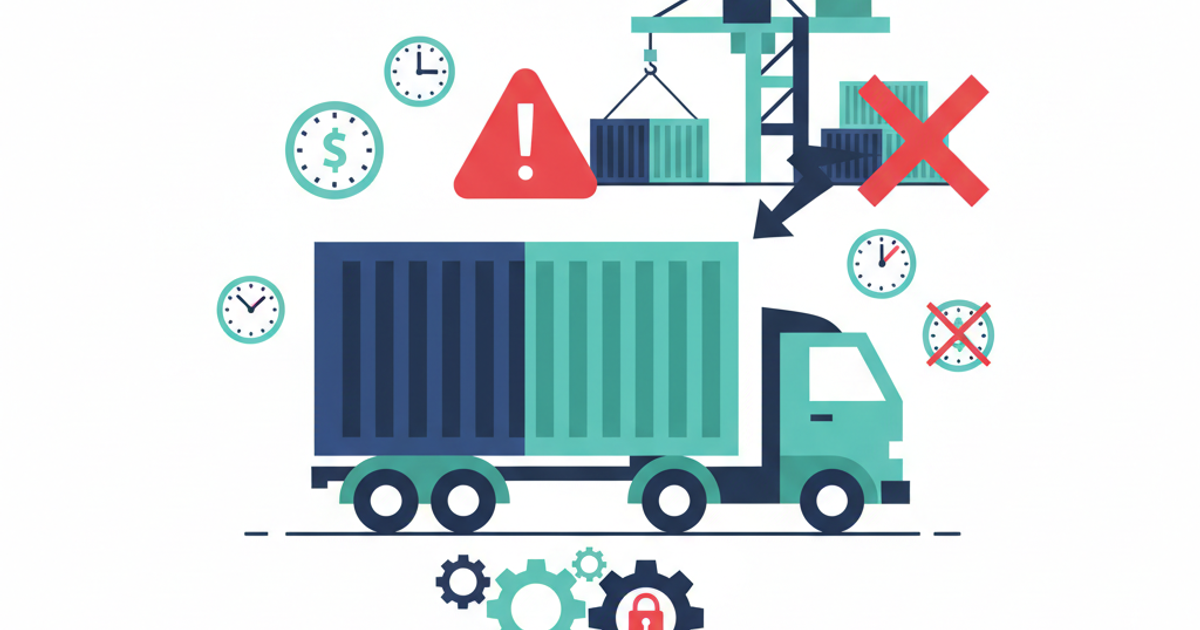
Demurrage is a daily charge applied when a container or railcar is not picked up or returned within the allotted free time at a terminal or port. It is not a penalty. It is a fee for occupying space past a contractually agreed window. If you broker ocean, intermodal, or drayage freight, you have almost certainly seen a demurrage line item land on an invoice you did not expect. According to industry data cited by Windward, those charges range from $75 to $300 per container per day, and they can climb much higher at congested ports. A single 40-foot container sitting 10 days at the Port of Los Angeles can generate $1,100 or more in demurrage alone, before the detention clock even starts ticking. This guide breaks down exactly how demurrage is calculated, how to tell a valid charge from an inflated one, and how to dispute an invoice before it eats your margin.
Here is a concrete example of demurrage: a 20-foot container arrives at a marine terminal with 4 free days. On day 5, the container is still sitting. The terminal or carrier begins billing $150 per day. By day 10, the broker receives a $1,100 invoice. That number is real, and it is just one charge on one container on one load.
What Is Demurrage, and Why Does It Keep Showing Up on Your Invoices?
Demurrage, in the legal and regulatory sense, is compensation charged by a vessel-operating common carrier (VOCC) or marine terminal operator (MTO) for the use of equipment or terminal space beyond the contractually allowed free time. The FMC's 2024 Final Rule on demurrage and detention billing formalized this definition and added new billing requirements that directly affect brokers, shippers, and carriers. In rail, the Surface Transportation Board defines demurrage similarly: it is compensation for the detention of rail cars beyond the allowed period.
Why does it keep hitting your invoices? Three reasons dominate.
Port congestion is still a factor
Per C.H. Robinson's November 2025 freight market update, vessel wait times at some U.S. ports have grown to eight days. When ships stack up, containers sit longer at terminals. Free time expires faster than drayage capacity can respond, and the demurrage clock runs whether or not a trucker was available to pick up the box.
Free time windows are shrinking
Carriers have been tightening free time allocations. Where importers once negotiated 7 to 10 free days on ocean containers, many contracts now default to 4 or 5. That smaller window leaves less room for coordination problems between the terminal, drayage provider, and warehouse. Every day the container sits past that window costs money.
Invoice visibility is poor
Most brokers handling drayage or intermodal loads do not have real-time visibility into when a container's free time expires. By the time the demurrage invoice arrives, days or weeks have passed, and the supporting documentation (if it exists) is scattered across emails, terminal websites, and carrier portals. That gap between the charge being incurred and the invoice being reviewed is where overbilling thrives.
Demurrage vs. Detention: They Are Not the Same Charge
Brokers and ops teams mix these up constantly, and carriers benefit from the confusion. Here is the distinction, stated plainly.
Demurrage is charged while the container sits at the terminal or port. The equipment has not been picked up yet. The clock is ticking on terminal space. As Maersk explains in their shipping glossary, demurrage applies specifically to the period when a full import container remains at the terminal beyond the free time allowed.
Detention is charged once the container has left the terminal. The trucker has the box on chassis, and the clock is ticking on the carrier's equipment being out in the field. Detention runs until the empty container is returned to the designated location.
These are sequential charges, not interchangeable ones. Demurrage starts first (at the terminal), and detention starts after (once the container is picked up). A broker can be billed for both on the same load, but never for the same days. If you see overlapping dates on a demurrage and detention invoice for the same container, that is a billing error, and likely an overbill.
For a deeper breakdown of how detention time works and who controls the clock, see our guide on how detention time is tracked and billed in trucking.
Why the distinction matters for your margin
Demurrage is typically the responsibility of the consignee or the party that controls when the container gets picked up. Detention is typically the responsibility of the party that controls the loaded or empty equipment while it is off-terminal. If your contract with the shipper does not specify who absorbs demurrage, you could end up holding the bill even though you had no control over the pickup delay. Review your rate con and broker-carrier agreement for explicit language on demurrage responsibility. If it is silent, negotiate it before the next load, not after the invoice arrives.
How Demurrage Is Calculated Across Ocean, Rail, and Truck Moves
Demurrage math is straightforward once you know three variables: the free time window, the per-diem rate, and the actual number of chargeable days. But each mode has its own quirks, and carriers do not always make these variables easy to find.
Ocean demurrage: port-by-port reality
Ocean demurrage is billed by the shipping line or marine terminal operator. The free time period starts when the container is discharged from the vessel (sometimes called "last free day" or LFD on terminal websites). Once free time expires, per-diem charges apply on a tiered scale: the rate goes up the longer the container sits. According to Windward's analysis of industry expert insights, importers and exporters face charges ranging from $75 to $300 per container per day, depending on container size, carrier, and port.
Here is a reference table showing typical demurrage rates and free time at major U.S. ports. These figures are based on publicly available carrier tariffs and can vary by shipping line and contract:
Port of LA/Long Beach: 4 to 5 free days typical. Days 1 to 4 over free time: $125 to $200/day. Days 5+: $250 to $450/day. 40-foot containers bill at the higher end. Port of Houston: 5 to 7 free days typical. Days 1 to 3 over free time: $75 to $150/day. Days 4+: $175 to $300/day. Port of Savannah: 4 to 6 free days typical. Days 1 to 3 over free time: $100 to $175/day. Days 4+: $200 to $350/day. Port of New York/New Jersey: 4 to 5 free days typical. Days 1 to 4 over free time: $150 to $225/day. Days 5+: $275 to $450/day.
These numbers shift based on your contract terms. A BCO (beneficial cargo owner) with volume commitments may negotiate 7 to 10 free days and lower per-diem rates. A broker handling spot drayage will usually be stuck with the carrier's standard tariff.
Rail demurrage: the PSR factor
Rail demurrage works on a similar principle. Containers or railcars sitting at an intermodal ramp past free time trigger daily charges. But here is the kicker: a 2025 peer-reviewed study published in ScienceDirect found that precision scheduled railroading (PSR) implementation is associated with an estimated 71% increase in rail demurrage charges. PSR compresses dwell time at ramps, which means free time windows are effectively shorter, even if the contractual days have not changed. If you are brokering intermodal loads, expect demurrage invoices to become more frequent, not less.
Rail demurrage rates typically range from $75 to $200 per container per day, depending on the railroad and ramp location. Free time is often 2 to 4 days, tighter than ocean.
Trucking demurrage: when it shows up and when it should not
In pure over-the-road trucking, the term "demurrage" is less common. What truckers and brokers usually deal with is detention at shipper or receiver, not demurrage in the traditional terminal sense. However, on drayage moves (truck pickup/delivery to and from a port or rail terminal), the trucker can end up in the middle of a demurrage situation. If the drayage carrier was dispatched to pick up a container and the terminal was not releasing boxes that day, the container sits longer, and someone gets billed. The question is always: who in the chain caused the delay, and who signed for the free time?
When a Demurrage Charge Is Valid, and When It Is Not
Not every demurrage invoice deserves to be paid. Under the FMC's 2024 demurrage and detention billing rule (46 CFR Part 541), billing parties must meet specific requirements for a demurrage invoice to be considered valid. If the invoice fails any of these tests, you have grounds to contest it.
What makes a demurrage invoice valid
A valid demurrage invoice must include, at minimum:
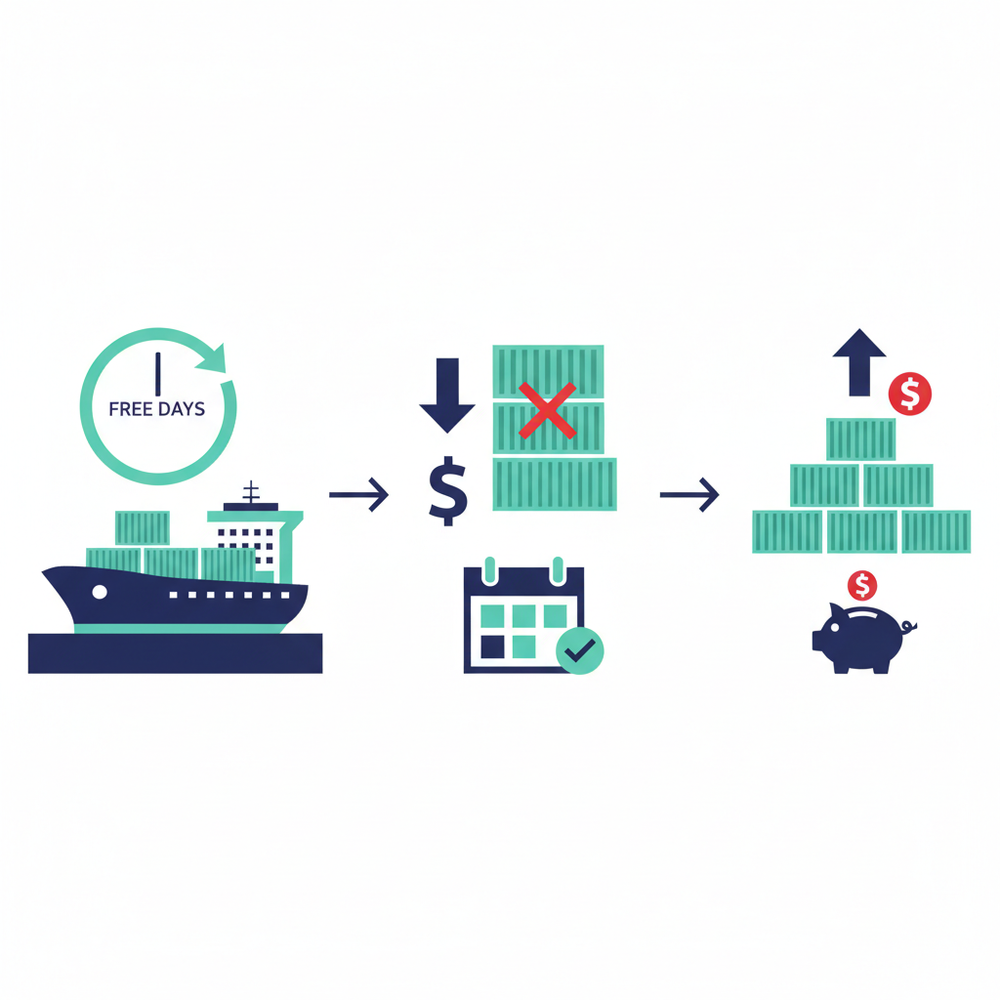
- The date the container was made available for pickup (the start of free time)
- The date free time expired
- The specific dates for which demurrage is being charged
- The per-diem rate applied for each day
- The container number and bill of lading reference
- The total amount due, broken out by container if multiple units are billed
Per the Federal Register publication of the 2024 FMC rule, billing parties must issue demurrage invoices within 30 calendar days from the date the charge was last incurred. If a carrier or terminal sends you an invoice 45 days after the container was picked up, that invoice may not comply with federal billing requirements.
Red flags that signal an invalid or inflated charge
- Missing documentation. No proof of when free time started or expired. No terminal event records.
- Weekend or holiday charges when your contract excludes them. Many ocean carrier contracts exclude weekends and terminal holidays from the demurrage calculation. If the invoice counts Saturday and Sunday as chargeable days but your contract says otherwise, that is an overbill.
- Charges starting before the container was available. If the terminal had a hold on the container (customs hold, freight hold, or carrier hold), demurrage should not accrue during that period. The container was not available for pickup, so free time should not have started.
- Rates that do not match the tariff or contract. Compare the per-diem rate on the invoice to the rate in your contract or the carrier's published tariff. Discrepancies of $25 to $100 per day are not uncommon.
- Double-billing with detention. If the invoice includes demurrage charges and detention charges for overlapping calendar days on the same container, that is a double-bill. Demurrage ends when the container leaves the terminal. Detention begins at that point. They do not run simultaneously.
Real-World Demurrage Scenarios: Do the Math Before You Pay
These examples walk through actual calculations so you can check the numbers on your own invoices.
Example: 40-foot ocean container at the Port of Los Angeles
A 40-foot container is discharged at the Port of LA. The carrier's tariff allows 4 free days. The drayage trucker does not pick up the container until day 10. The carrier's tiered rate schedule is $150/day for days 5 through 7, and $250/day for day 8 onward. Here is the calculation:
- Days 1 to 4: free (no charge)
- Days 5, 6, 7: $150 x 3 = $450
- Days 8, 9, 10: $250 x 3 = $750
- Total demurrage: $1,200
But wait. Check the contract. If the shipper negotiated 4 free days excluding weekends, and days 6 and 7 fell on Saturday and Sunday, those two days should be excluded. That drops the chargeable days from 6 to 4, and the corrected total is $150 (day 5) + $250 x 3 (days 8, 9, 10) = $900. That is a $300 difference on a single container. Multiply that across 20 containers a month and you are looking at $6,000 in avoidable charges.
Example: Rail drayage with a one-day overage
A container arrives at an intermodal ramp with 5 free days. The broker dispatches a drayage carrier to pick it up on day 5, but the carrier does not arrive until day 6 due to a chassis shortage at the ramp. The terminal invoices the broker $300 for one day of demurrage. Who is responsible? The broker needs to look at the chain of custody. If the drayage carrier was late due to their own scheduling, the charge may be recoverable from the carrier. If the chassis shortage was a terminal issue (no chassis available despite the carrier arriving on time), the broker has a case to dispute the charge with the terminal. The $300 does not automatically belong on the broker's P&L.
Example: Late invoice with no documentation
A broker receives a demurrage invoice 45 days after the load closed. The invoice shows $600 for 4 days of demurrage on a 20-foot container but includes no terminal event data, no proof of when free time started, and no container availability date. Under the FMC's 30-day invoicing requirement, the billing party must issue the invoice within 30 calendar days of the last date the charge was incurred. An invoice arriving at day 45 may fall outside this window. The broker should respond in writing, request the terminal event records, and cite the FMC rule. If the billing party cannot provide supporting documentation, the invoice is contestable.
Example: TONU plus demurrage double-billing
A trucker is dispatched for a drayage pickup. The terminal is closed unexpectedly (system outage), and the trucker leaves without the container. The carrier invoices the broker for a $600 TONU (truck order not used) plus a $400 demurrage charge for the same load on the same day. This is a double-bill. The TONU covers the carrier's cost of rolling a truck that made no pickup. The demurrage charge covers the container sitting at the terminal. But if the container was never picked up, the demurrage clock may still be running from a prior day, not from the date of the failed pickup. These two charges need to be separated by date and event. If both charges reference the same day and the same failed pickup, the broker should dispute the demurrage portion. For more on how to catch carrier overbilling on detention and demurrage charges, we have a detailed breakdown.
Example: Inflated invoice ignoring contract free time
A shipper books a 20-day free time window in their ocean carrier contract. The container sits at the terminal for 22 days. The demurrage rate is $200/day. The valid charge should be 2 days x $200 = $400. But the invoice shows $1,200. Why? The carrier counted 6 chargeable days, including 4 weekend days that are excluded under the contract terms. The broker (or the shipper's customs broker) needs to pull the contract, confirm the weekend exclusion language, and dispute the $800 overage. The corrected amount is $400. If you are dealing with disputes like this regularly, our guide on how to win freight detention charge disputes covers the step-by-step process.
How to Dispute a Demurrage Invoice Before You Pay It
You have 30 calendar days from the date an invoice is issued to contest demurrage and detention charges under the FMC's 2024 rule. That window is firm. If you let it pass without filing a dispute, your ability to recover the money drops sharply. Here is how to handle it.
Step 1: Pull the rate con and contract terms
Before you look at the invoice, pull the rate confirmation, the ocean carrier contract (or tariff), and any terminal schedules that apply. Confirm: what was the free time window? Were weekends and holidays excluded? What is the per-diem rate at each tier? You cannot verify an invoice if you do not know what the rate should be.
Step 2: Request terminal event data
Ask the billing party for the terminal event records showing when the container was discharged from the vessel, when it was made available for pickup, and when it was actually picked up. If there were any holds (customs, freight, carrier), those dates should be documented. Demurrage should not accrue during hold periods.
Step 3: Match the invoice to the data
Line up the invoice dates with the terminal event data and contract terms. Check each day individually. Is the start date correct? Are excluded days (weekends, holidays, hold days) removed? Does the per-diem rate match the contract or tariff? Is the container number correct? Invoice errors on container numbers are more common than you would expect, especially on multi-container loads.
Step 4: File the dispute in writing within 30 days
If you find a discrepancy, send a written dispute to the billing party. Include the invoice number, the container number, the specific line items you are contesting, and the supporting documentation (contract terms, terminal event records, your own calculations). Reference the FMC's billing requirements. Be specific: "The invoice charges demurrage for days 8 and 9, which are Saturday and Sunday and excluded per our contract. We request a corrected invoice reflecting a total of $400, not $800."
Step 5: Track the dispute and set a follow-up deadline
Disputes that go untracked become writeoffs. Set a 14-day follow-up reminder. If the billing party does not respond or refuses to correct the invoice, escalate to the FMC's complaint process. Under 46 CFR Part 541, carriers and terminal operators have obligations to respond to properly filed disputes.
You have 30 calendar days from the date a demurrage invoice is issued to file a dispute. Miss that window and your recovery options shrink fast.
Frequently Asked Questions About Demurrage Fees
What is meant by demurrage charges?
Demurrage charges are daily fees assessed when a container or railcar is not picked up or returned within the free time allowed at a terminal, port, or rail ramp. The charge compensates the terminal operator or carrier for the space and equipment being occupied beyond the agreed period. It is not a penalty; it is a contractual fee based on the tariff or service agreement.
Is demurrage a penalty?
No. Demurrage is a contractual charge, not a penalty. It represents the cost of holding space and equipment beyond the free period. That said, carriers and terminal operators sometimes apply demurrage in ways that feel punitive, especially when free time is short and port congestion makes timely pickup impossible. The FMC's 2024 rule introduced billing transparency requirements specifically to address these situations.
What is the legal definition of demurrage?
In the context of ocean shipping, demurrage is defined under 46 CFR Part 541 as charges for the use of terminal space or carrier equipment beyond the allowed free time. For rail, the Surface Transportation Board defines it as compensation paid by shippers for the detention of rail cars beyond the allowed period. The legal framework varies by mode, but the core principle is the same: it is a time-based fee for holding equipment or space.
How much do demurrage fees cost per day?
Per-day demurrage rates vary widely by port, carrier, container size, and how many days past free time the container sits. According to Windward's analysis of industry expert data, typical rates range from $75 to $300 per container per day. At congested ports like LA/Long Beach and New York/New Jersey, tiered rates can push above $400 per day after the first few days of overage on a 40-foot container.
Can I dispute a demurrage invoice?
Yes. Under the FMC's 2024 rule, billed parties have 30 calendar days from the date an invoice is issued to contest demurrage charges. You must file the dispute in writing and include the specific line items you are contesting with supporting documentation. The billing party is required to respond. If the invoice was issued more than 30 days after the charge was last incurred, the invoice itself may not comply with federal requirements.
Sources
- 46 CFR Part 541: Demurrage and Detention — Electronic Code of Federal Regulations
- FMC Publishes Final Rule on Detention and Demurrage Billing Practices — Federal Maritime Commission
- Demurrage and Detention Billing Requirements (Federal Register) — Federal Register
- Demurrage and Detention Charges Down, But Issues Remain at Some Ports — ISM World
- Precision Scheduled Railroading, Demurrage, and Shipper Outcomes — ScienceDirect
- Freight Market Update: November 2025 — C.H. Robinson
- 4 Industry Expert Insights for Managing Detention and Demurrage — Windward
- What Is Demurrage and Detention in Shipping for Buyers? — Maersk
- Demurrage and Accessorial Charges — Surface Transportation Board
Stop Paying Demurrage You Do Not Owe
Every demurrage invoice deserves the same treatment: pull the contract, check the dates, match the rates, and verify the documentation. The FMC's 30-day dispute window gives you a real mechanism to push back, but only if you catch the problem in time. Most of the overbilling in demurrage comes down to weekend charges that should be excluded, hold days that should not count, and rates that do not match the contract. Those are math problems, not mysteries.
If your team processes more than 50 invoices a week and does not have time to manually verify every demurrage line item against terminal records and contract terms, tools that automatically flag invoice discrepancies can catch the errors covered in this guide before they become margin losses.
Related: Detention Charges in Shipping: How Carriers Miscalculate and What It Costs You
Related: Detention Charges in Trucking: Document, Calculate, and Win Disputes