Freight Detention Charge Disputes: How to Win Every One
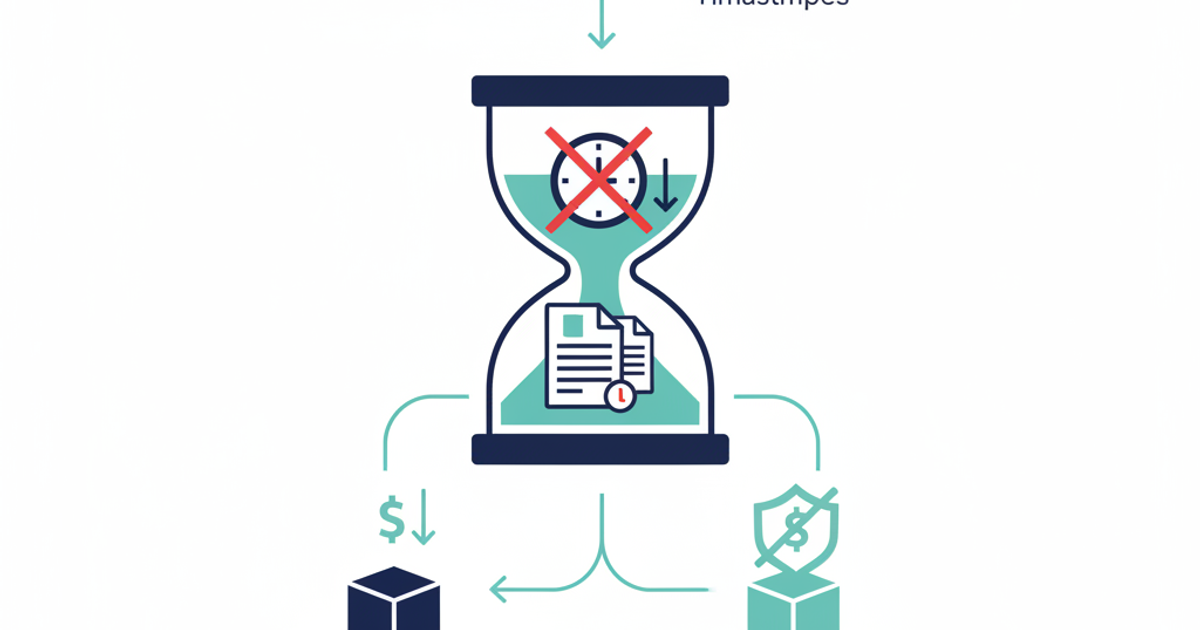
A 200-load-per-month brokerage averaging just 3.8% detention billing errors at $400 per overcharge loses $3,040 every month. That is $36,480 a year in margin walking out the door, simply because nobody had time to check the math. Freight detention charge disputes are one of the fastest ways to recover real money, but most brokers either skip them entirely or file weak claims that get ignored. This guide is the operational playbook you need to change that. You will get the exact documents, timestamps, and dispute scripts required to reverse detention overcharges across truckload, LTL, and drayage. We are talking about recoveries ranging from $475 to $2,800 per load, backed by evidence strategies carriers cannot argue with.
Why 22% of Detention Charges Have Billing Errors (And Most Brokers Just Pay Them)
Industry audits consistently show that roughly one in five detention invoices contains a billing error. Sometimes the error is small: a carrier rounding up from 2 hours 10 minutes to 3 hours. Sometimes it is significant: billing detention from dispatch time instead of facility arrival, or ignoring the free-time window specified in the rate con entirely. Either way, the money adds up fast.
The reason most brokers pay these invoices without a fight comes down to three things. First, time. Your billing coordinator is already buried in reconciling carrier packets, matching BOLs to rate cons, and chasing PODs. Manually reviewing timestamps on every detention charge is the task that keeps getting pushed to next week. Second, documentation gaps. Even when a charge looks wrong, proving it requires matching GPS data to facility logs to rate con terms, and if any one of those pieces is missing, the dispute feels unwinnable before it starts. Third, the dollar amounts on individual charges often seem small enough to absorb. A $350 charge here, a $500 charge there. Nobody is losing sleep over it in the moment.
But those small charges compound. Across a year of loads, uncontested detention billing errors can cost a mid-size brokerage tens of thousands in margin. Worse, carriers who see that you never dispute charges have zero incentive to bill accurately. The pattern reinforces itself. The fix is not working harder. It is building a repeatable system that catches errors before they get paid and produces disputes that actually result in reversals.
The 6 Documents You Need Before You File Any Detention Dispute
Filing a detention dispute without the right paperwork is like showing up to court without evidence. You might be right, but you will not win. Before you send a single dispute email, make sure you have these six documents collected and cross-referenced for the load in question.
The Foundation: Rate Con and BOL
Start with the rate confirmation. This is your contract. It defines the agreed-upon free time (typically 2 hours for loading and 2 hours for unloading), the detention rate per hour after free time expires, and any caps or special terms. If the rate con says 2 hours free and the carrier is billing from minute one, you already have your dispute. Next, pull the Bill of Lading. The BOL often contains facility timestamps for arrival and departure that serve as a neutral third-party record. Many facilities stamp the BOL when the driver checks in at the gate and again when loading or unloading is complete. These timestamps are your anchor.
The Evidence Layer: GPS Data, Facility Logs, and the POD
GPS or ELD arrival data provides an independent timestamp showing when the truck actually reached the facility geofence. This is critical because some carriers start their detention clock from their own driver check-in call, which may happen before or after actual arrival. Facility gate logs (if available) add another data point. Many warehouses and distribution centers maintain their own records of truck arrivals and departures. Request these from the shipper or receiver when a charge looks suspicious. The Proof of Delivery confirms when the load was actually completed. In LTL and drayage disputes especially, the POD can prove that delivery fell within the free-time window even when the carrier claims otherwise. Finally, keep the original carrier invoice or detention charge detail. You need the exact line item you are disputing, including the carrier's stated detention start time, end time, and calculated hours.
Six documents: rate con, BOL, GPS/ELD data, facility gate log, POD, and the carrier's invoice detail. Collect all six before you type a word of your dispute. Missing even one gives the carrier room to reject your claim.
Timestamps Win Disputes: How to Build an Evidence Trail Carriers Cannot Deny
The single most important factor in winning a detention dispute is not your argument. It is your timestamps. Carriers know this. The ones who overbill are counting on the fact that most brokers cannot produce time-stamped evidence that contradicts their invoice. When you can, the dispute is almost always resolved in your favor.
Matching Timestamps Across Sources
Here is how this works in practice. Your rate con says the delivery appointment is at 10:00 AM with 2 hours free time. The carrier's invoice claims the driver arrived at 9:15 AM and was not unloaded until 2:45 PM, billing 3.5 hours of detention (5.5 hours total minus 2 hours free). But your GPS data shows the truck entered the facility geofence at 10:40 AM, not 9:15 AM. The BOL stamp from the receiving dock shows check-in at 10:52 AM. The POD shows unloading completed at 1:38 PM. Actual time from arrival to completion: 2 hours 58 minutes. Subtract the 2-hour free window, and the legitimate detention is 58 minutes, not 3.5 hours. At $75 per hour, the difference between the carrier's invoice and reality is roughly $190. Scale that pattern across dozens of loads per month and you see why timestamp evidence is the single highest-ROI activity in your back office.
Why Carrier Check-In Times Are Unreliable
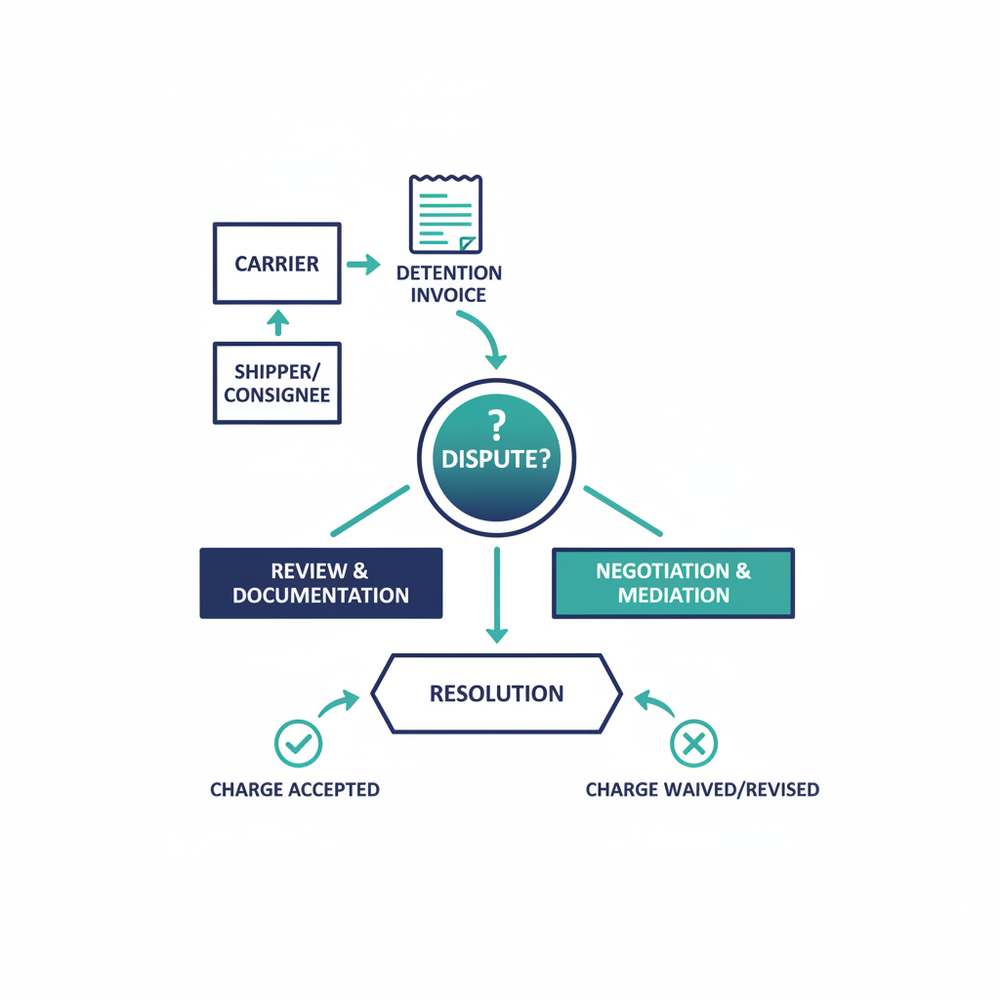
Many carriers instruct drivers to call in their arrival time to dispatch, and that call-in time becomes the official start of detention on the invoice. The problem is obvious: a driver might call dispatch from a truck stop 15 minutes away, or check in at a facility guard gate 30 minutes before actually reaching the dock. This is not necessarily fraud. It is a difference in how arrival is defined. But your rate con defines the terms, and in most agreements, detention starts when the truck is at the facility and available for loading or unloading, not when the driver makes a phone call. GPS and facility logs settle this question with data, not opinion. If you are not capturing and storing this data automatically on every load, you are leaving money on the table.
Step-by-Step: Filing a Detention Dispute That Actually Gets a Response
Most detention disputes fail not because the broker is wrong, but because the dispute is filed poorly. A vague email with no reference numbers and no attached evidence gets buried. A specific, well-documented dispute gets paid. Here is the step-by-step process.
Step 1: Identify the charge within 48 hours of receiving the carrier invoice. The sooner you flag it, the easier it is to collect supporting documents. Step 2: Pull your six documents (rate con, BOL, GPS data, facility log, POD, carrier invoice). Step 3: Calculate the correct detention amount based on rate con terms, using your timestamps as the source of truth. Step 4: Write the dispute email (templates below). Include the load number, carrier PRO or invoice number, the specific dollar amount you are disputing, the rate con detention terms, your calculated correct amount, and attach all supporting documents. Step 5: Send the dispute to the carrier's billing or accounts payable contact. Copy your ops manager and the carrier's dispatcher if you have a relationship. Step 6: Follow up at day 5, day 10, and day 15 if you have not received a response. After day 15 with no response, escalate to a phone call with the carrier's billing manager.
The key principle: be specific, be fast, and attach everything. Carrier billing departments process hundreds of invoices. They will resolve the disputes that are easiest to verify first. Make yours the easiest.
Dispute Letter Templates You Can Copy and Send Today
Below are two versions of a detention dispute email. The first is the kind that gets ignored. The second is the kind that gets paid.
The Weak Dispute (Do Not Send This)
Subject: Dispute on recent load. Body: Hi, we are disputing the detention charge on a recent load. The driver was not there as long as you billed. Please review and adjust. Thanks.
No load number. No rate con reference. No timestamps. No dollar amount specified. No documents attached. This email will sit in an inbox for weeks and never get a response.
The Strong Dispute (Use This as Your Template)
Subject: Detention Dispute, Load #LPR-44821, Invoice #INV-9034, Requesting $475 Adjustment. Body: To [Carrier] Billing, We are disputing the detention charge on Load #LPR-44821, your Invoice #INV-9034, dated 06/12/2025. Your invoice bills 4.0 hours of detention at $187.50/hour ($750 total). Per the attached rate confirmation (signed 06/08/2025), the delivery appointment was 08:00 AM with a 2-hour free-time window. Detention applies at $75/hour after free time. Our GPS data shows the truck arrived at the facility geofence at 08:40 AM. The BOL (attached) shows dock check-in at 08:47 AM. The POD (attached) shows unloading completed at 12:25 PM. Total facility time from arrival: 3 hours 45 minutes. Less 2 hours free time: 1 hour 45 minutes billable detention. Correct detention charge at $75/hour: $131.25. We are requesting an adjustment of $618.75 from the invoiced $750.00 to the correct amount of $131.25. Alternatively, we will accept a net credit of $618.75 against our next settlement. Attached: Rate confirmation, BOL with facility timestamps, GPS arrival screenshot, POD, your invoice #INV-9034. Please confirm receipt and expected resolution timeline. Regards, [Your Name], [Your Brokerage]
This email includes every detail the carrier's billing team needs to verify the claim without asking follow-up questions. That is why it gets resolved in 10 days while the vague version gets ignored indefinitely.
Real Disputes, Real Numbers: 3 Broker Scenarios From $475 to $2,800 Recovered
These three scenarios illustrate what detention billing errors actually look like in practice and how much money is recoverable when you have the right evidence.

Scenario 1: The Inflated Arrival Time ($475 Recovered)
A broker pays a $750 detention charge on a full truckload delivery. The carrier's invoice shows the driver arriving at 7:20 AM for an 8:00 AM appointment, with detention starting from 7:20. The rate con specifies a 2-hour free window starting from the appointment time. The BOL timestamp shows the driver actually checked in at 8:40 AM. GPS data confirms arrival at the facility geofence at 8:37 AM. The POD shows unloading complete at 12:10 PM. Actual billable detention from appointment time: 12:10 PM minus 10:00 AM (end of free time) equals 2 hours 10 minutes. At $75/hour, correct detention is $162.50. The broker filed a dispute with all six documents attached. The carrier credited $475 within 9 business days. The root issue: the carrier billed detention starting from their driver's self-reported check-in time, not the rate con appointment window.
Scenario 2: The Incorrect Free-Time Calculation ($350 Recovered)
An LTL shipment arrives with a $350 detention charge. But the POD shows delivery completed 1 hour 48 minutes after arrival, well within the 2-hour free-time window. The carrier had started their free-time clock from when the load was dispatched (hours earlier), not from facility arrival. The broker pulled the POD, the GPS arrival timestamp, and the rate con terms showing free time begins at arrival. The dispute was filed with a clear calculation showing zero billable detention hours. Full reversal: $350 credited in 11 days. This error is more common on LTL than you might expect. Carriers using older TMS systems sometimes auto-calculate detention from dispatch events rather than arrival events.
Scenario 3: The Drayage Overcharge ($1,850 Recovered)
A drayage load comes in with a combined $2,800 invoice for detention and per-diem fees, covering 36 hours. The broker cross-references port terminal data (available through most port authority websites) and finds that the container was not available for pickup during 18 of those 36 hours due to terminal congestion and vessel delays outside the trucker's control. The broker filed the dispute with terminal availability screenshots, the original booking confirmation, GPS data showing the driver's attempted pickups, and the rate con terms specifying that detention only applies when cargo is available. Result: the charge was reduced to $950. A $1,850 recovery on a single load. This scenario highlights why drayage detention disputes require a different evidence set than over-the-road trucking. Port terminal data, vessel tracking, and container availability records are essential.
A 200-load-per-month brokerage with a 3.8% detention billing error rate at $400 average overcharge loses $36,480 per year. Filing disputes on just half of those errors recovers over $18,000 annually.
How to Build a Weekly Detention Audit So Nothing Slips Through
Winning individual disputes is good. Building a system that catches every disputable charge automatically is better. Here is how to set up a weekly detention audit that takes your billing coordinator 30 to 45 minutes and prevents thousands in annual losses.
Start by designating one day per week (most brokers pick Monday or Friday) as detention review day. On that day, your billing coordinator pulls every carrier invoice from the prior week that includes a detention, layover, or wait-time line item. For each invoice, they compare three data points: the detention hours billed by the carrier, the rate con free-time terms, and the actual arrival and departure timestamps from GPS/ELD and BOL records.
Any invoice where the carrier's billed hours exceed the timestamp-verified hours by more than 30 minutes gets flagged for dispute. Anything within 30 minutes is a judgment call, but we recommend disputing anything over $50 in discrepancy. Small wins add up.
Track your disputes in a simple spreadsheet or your TMS if it supports it. Columns should include: load number, carrier name, amount billed, amount you calculated as correct, dispute amount, date filed, date resolved, and outcome (full reversal, partial credit, denied). After 90 days, review the data. You will quickly see which carriers consistently overbill, which facilities cause the most detention events, and what your average recovery per dispute looks like.
Automating the Tedious Parts
The biggest time cost in detention auditing is not the dispute itself. It is collecting and matching the documents. Pulling the rate con, finding the BOL timestamp, cross-referencing GPS arrival data, and comparing it to the carrier invoice line by line. For a 200-load operation, doing this manually on every load is not realistic. That is where document extraction tools make the difference. If you can automatically pull timestamps, free-time terms, and detention charges from rate cons, BOLs, and carrier invoices without manual data entry, the weekly audit drops from a half-day task to a 30-minute review. Laneproof's freight document extraction (/tools/document-extract) does exactly this, pulling the relevant data points from your documents so your team spends time on decisions, not data entry. Paired with automated invoice reconciliation (/tools/reconcile), you can flag detention discrepancies the moment a carrier invoice comes in rather than catching them days or weeks later.
Your Detention Dispute Checklist
Use this checklist every time a detention charge crosses your desk. Print it, pin it to the wall above your billing coordinator's monitor, or save it where your team can access it instantly.
- Pull the rate confirmation and confirm the agreed-upon free-time window and detention rate per hour - Pull the BOL and check for facility timestamps (gate check-in, dock assignment, loading/unloading start and end) - Pull GPS or ELD data showing actual truck arrival time at the facility geofence - Request the facility gate log from the shipper or receiver if available - Pull the POD and confirm delivery completion time - Compare the carrier's billed detention hours against your timestamp-verified hours - Calculate the correct detention charge using rate con terms and verified times - If the discrepancy exceeds $50, draft a dispute email using the strong template above - Attach all six documents to the dispute email - Send to the carrier's billing contact within 48 hours of receiving the invoice - Follow up at day 5, day 10, and day 15 - Log the dispute in your tracking spreadsheet with load number, amounts, and dates - Review dispute outcomes monthly to identify repeat offenders and process improvements
Detention charge disputes are not about being adversarial with your carriers. They are about billing accuracy. Good carriers appreciate brokers who catch errors because it keeps the relationship clean and the numbers honest. When you show up with organized evidence, specific dollar amounts, and rate con terms, you are not picking a fight. You are doing your job. The brokers who build this into their weekly workflow recover thousands per year. The ones who do not are subsidizing someone else's billing mistakes. If collecting and matching documents is the bottleneck stopping you from disputing detention charges, take a look at what Laneproof can pull from your freight documents automatically at /tools/document-extract. The evidence is already in your paperwork. You just need a faster way to find it.
Full guide: Detention Charges: How Carriers Overbill and How to Fight Back