What a Signed Delivery Receipt Actually Does in a Freight Dispute
Researched and written with AI assistance. Reviewed by the Laneproof team.
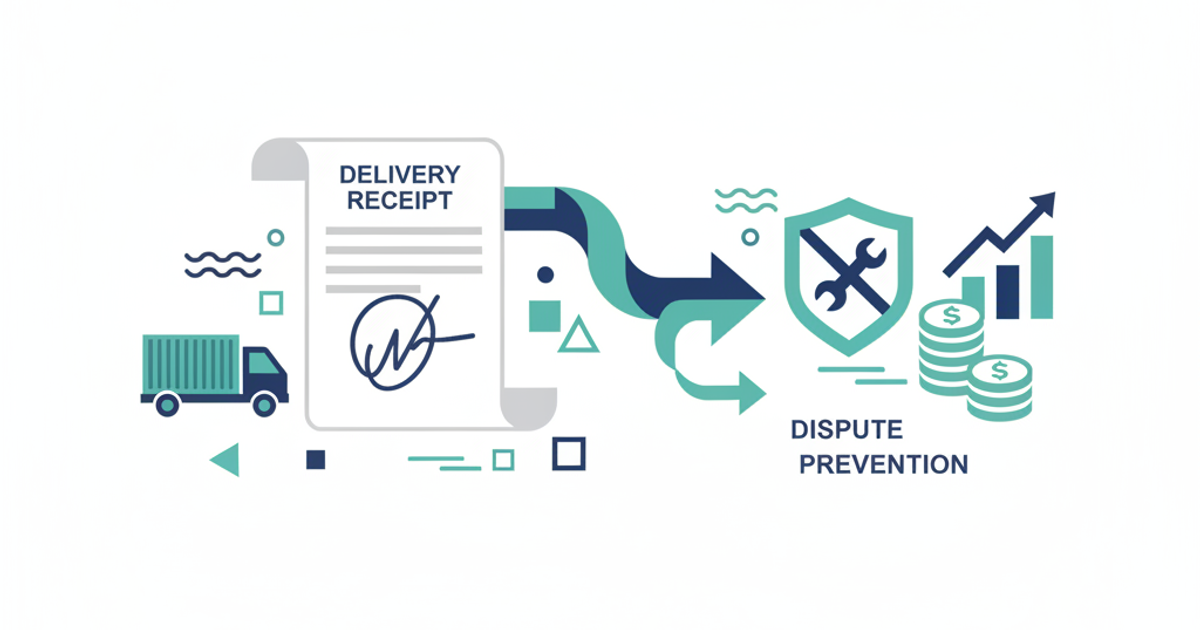
A delivery receipt in freight is a signed document confirming that a shipment arrived at its destination, noting the date, time, condition of goods, and any exceptions at the point of delivery. That definition sounds simple. The problem is that most brokers treat it like a formality, and most carriers know that. A $350 detention charge gets billed against a load where the signed delivery receipt clearly shows the driver was on-site for 43 minutes, well under the 2-hour detention minimum. But the broker can't find the receipt fast enough, or the receipt is missing a timestamp, or nobody signed it at all. The charge gets paid. Multiply that across 200 loads a month and you start to understand why small brokers lose between $1,200 and $4,800 monthly on accessorial charges that could have been disputed with a single document.
This guide covers what a delivery receipt must contain to function as enforceable billing evidence in freight, how it differs from your BOL and POD, what happens when one is missing or altered, and how the requirements shift between LTL, FTL, and drayage loads. If you've ever lost a dispute because your paperwork didn't hold up, this is the document that fixes that.
What Is a Delivery Receipt — and Why the Generic Definition Gets You in Trouble
Search "delivery receipt" and you'll find pages of fillable PDF templates designed for e-commerce sellers and package delivery. Those definitions are useless in freight. A delivery receipt in the freight context is a document signed by the consignee (or their agent at the receiving dock) confirming that goods were physically received, in what quantity, and in what condition. It is not the same as an email read receipt. It is not the same as a shipping confirmation. It is a legal record of the transfer of custody from carrier to receiver.
The Regulatory Foundation Most Brokers Don't Know About
Under 49 CFR Part 373, every motor carrier is required to issue a receipt or bill of lading for property tendered for transportation in interstate or foreign commerce. This isn't optional guidance. It's federal regulation. The delivery receipt is the counterpart to that initial receipt: it closes the loop by documenting that the property was delivered as tendered.
FMCSA goes further. According to FMCSA guidance on delivery of shipments, a delivery receipt must not contain language that purports to release or discharge the carrier or its agents from liability. This matters because some carriers use pre-printed delivery receipts with release-of-liability clauses buried in the fine print. If your consignee signs one of those without reading it, you may have just signed away your right to file a damage claim.
The generic template sites don't mention any of this. They give you a fillable form with "Date," "Recipient Name," and "Signature" fields and call it done. In freight, that's the equivalent of bringing a napkin to a contract negotiation.
Why Brokers Pay the Price for Bad Definitions
When a broker treats the delivery receipt as a checkbox rather than a billing instrument, they lose the ability to push back on carrier invoices. Detention charges, lumper fees, accessorials, even dry run fees all depend on what the delivery receipt says (or doesn't say). A receipt that's missing timestamps can't disprove detention. A receipt with no notation about third-party unloading can't challenge a lumper fee. The document only works as evidence when it contains the right information.
How a Delivery Receipt Is Different From Your BOL and POD
Brokers and dispatchers use the terms delivery receipt, BOL (bill of lading), and POD (proof of delivery) interchangeably. They're not the same document, they don't serve the same purpose, and confusing them costs money in disputes.
The Bill of Lading (BOL)
The BOL is the contract of carriage. It originates at pickup, lists the shipper, consignee, commodity description, weight, piece count, and freight class. As Truckstop.com explains in their freight broker documents guide, the bill of lading serves as the carrier's receipt for freight and the governing document for the terms of transport. The BOL travels with the load. It tells everyone what was supposed to be shipped and where it was supposed to go.
What the BOL does not do: confirm what actually arrived, in what condition, or at what time. That's the delivery receipt's job.
Proof of Delivery (POD)
POD is a broader category. It can include the signed delivery receipt, a signed BOL, photos of the freight at destination, GPS confirmation, or electronic signatures captured in a TMS. For a deeper breakdown of what qualifies as valid POD in a billing dispute, see what proof of delivery actually holds up in a freight dispute.
The delivery receipt is often the core component of POD, but POD can include additional documentation. Think of it this way: the delivery receipt is the signed statement of facts at the dock. POD is the full evidence package you assemble from those facts.
Where Confusion Creates Real Losses
Here's where it matters operationally. A carrier submits an invoice with a signed BOL as their "proof of delivery." The BOL shows 12 pallets shipped. But the delivery receipt (which the carrier didn't attach) shows 11 pallets received with an exception noted. Without that delivery receipt, the broker has no documentation to support a shortage claim. The BOL alone proves what left the dock, not what arrived. If your team doesn't distinguish between these documents in your filing and review process, you're building dispute cases on incomplete evidence.
What Has to Be on a Delivery Receipt for It to Stop a Dispute
A delivery receipt is only as strong as the data it contains. A signature by itself proves someone was present. It doesn't prove when the driver arrived, how long unloading took, whether there was damage, or whether a lumper was used. For the delivery receipt to function as billing evidence, it needs specific fields filled out completely.
The Required Fields
- Date and time of arrival: Not just the date. The specific time the driver arrived at the facility. This is your primary defense against inflated detention claims.
- Date and time of departure: The timestamp when the driver left the facility after unloading. Arrival minus departure equals actual dock time.
- Piece count received: The actual number of units, pallets, cases, or pieces the consignee counted at delivery. This must match (or explicitly not match) the BOL.
- Condition notes and exceptions: Any damage, shortage, overage, or discrepancy observed at the time of delivery. "4 pallets received, 1 short" or "Pallet 3 shrink wrap torn, visible water damage" are the types of notes that support freight claims.
- Consignee signature (legible): The signature of the person at the receiving dock who accepted the freight. Illegible signatures are routinely challenged in disputes.
- Printed name and title of signer: Many facilities have dock workers sign, but the signer's authority matters. A printed name ties the signature to a specific individual.
- Reference numbers: The PRO number, PO number, or load number that ties this receipt back to the rate con and the carrier invoice.
- Notation of accessorial services: If a lumper was used, if the driver assisted with unloading, if a liftgate was required, if inside delivery occurred. These notations either support or disprove accessorial charges on the carrier's invoice.
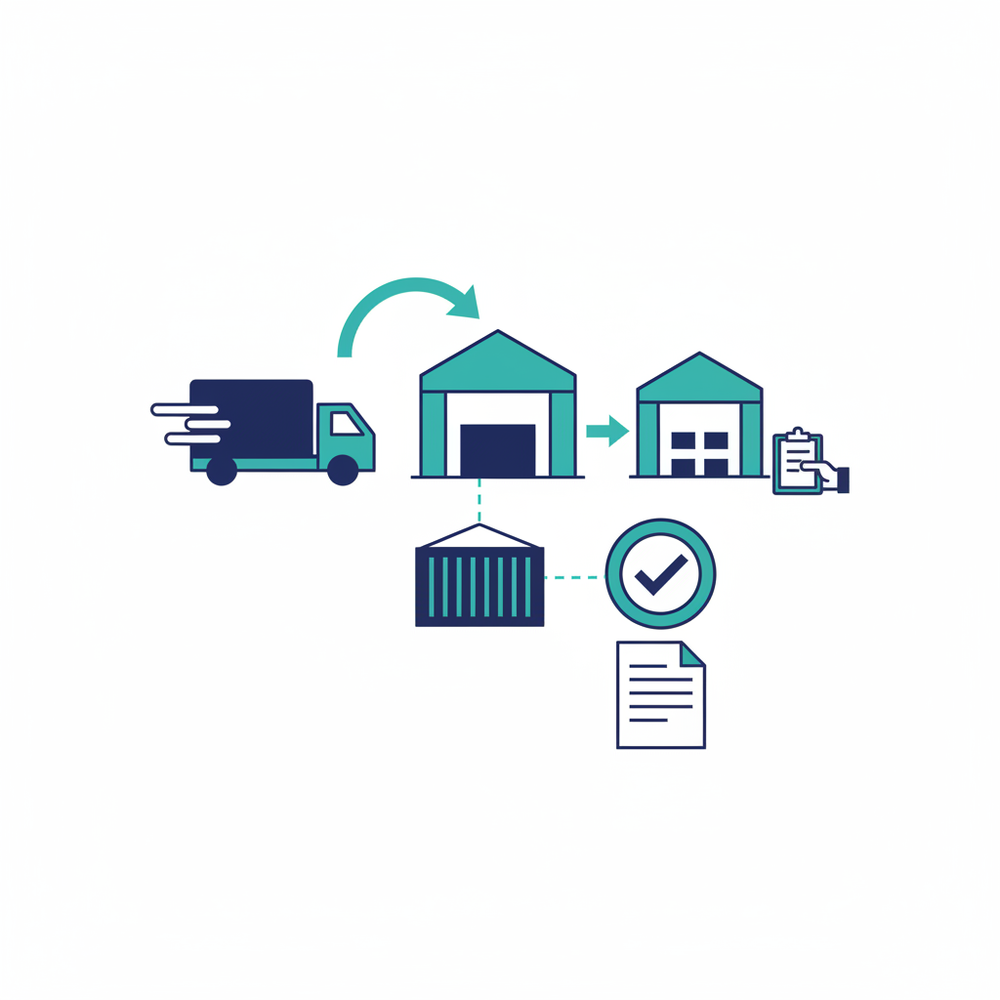
According to FreightDoc's proof of delivery best practices guide, the driver should photograph the signed delivery receipt and upload it to the carrier portal within 2 hours of delivery. That timeline matters because paper receipts get lost, smudged, or "misplaced" when a dispute arises weeks later.
The Lumper Fee Problem
Lumper fees are one of the most commonly disputed accessorial charges, and the delivery receipt is where the evidence trail either starts or dies. If you need a refresher on exactly what a lumper receipt must include to win a billing dispute, this breakdown of lumper receipt requirements covers the specific fields that hold up.
A delivery receipt without timestamps, exception notes, and a legible signature is just a piece of paper. It becomes evidence only when every field that matters in a dispute is filled in at the dock, not reconstructed later.
What Happens When a Delivery Receipt Is Missing, Unsigned, or Altered
Missing or incomplete delivery receipts create a documentation vacuum. And in freight disputes, the party without documentation loses.
Missing Delivery Receipts
When a carrier submits an invoice without a signed delivery receipt, the broker has two problems. First, they can't confirm the load was actually delivered as described. Second, they have no counter-document if the carrier bills accessorials, detention, or layover. According to AWCollects' freight broker payment terms guide, a signed delivery receipt is required paperwork for carrier payment. Without it, the broker is technically within their rights to hold payment until the documentation is provided. In practice, many brokers pay anyway to maintain carrier relationships, absorbing charges they could have disputed.
Unsigned or Partially Signed Receipts
An unsigned delivery receipt is essentially a carrier-generated document with no third-party verification. It carries almost no weight in a dispute. A partially signed receipt (signature but no date, date but no time, no exception notes) creates ambiguity that typically resolves in favor of whoever has more documentation. If the carrier has their own records showing a 3-hour dock time and the broker's delivery receipt has no timestamps to counter that, the detention charge sticks.
Altered Receipts
Alterations to delivery receipts, whether timestamps changed, exception notes crossed out, or signatures added after the fact, are a serious problem. Digital delivery receipts with audit trails are harder to alter than paper ones. If your operation still relies on paper delivery receipts, your team should be scanning or photographing them at the dock before they leave the consignee's hands. Any discrepancy between the scanned version and the version submitted with the carrier invoice is grounds for rejecting the invoice outright.
For a deeper look at what makes any proof of delivery document enforceable versus decorative, this guide to POD in freight covers the specifics.
Delivery Receipts by Load Type: LTL, FTL, and Drayage Don't Work the Same Way
The delivery receipt requirements shift depending on the type of freight movement. Brokers who use a single receipt template across all load types leave gaps that carriers exploit.
FTL (Full Truckload)
FTL delivery receipts are typically the most straightforward. One shipper, one consignee, one truck. The delivery receipt should capture arrival time, departure time, piece count, seal number (and whether the seal was intact), and any condition exceptions. The most common FTL dispute tied to the delivery receipt is detention. If the receipt shows arrival at 1:04 PM and departure at 1:47 PM, that's 43 minutes of dock time. Most carrier-broker agreements define detention as time exceeding 2 hours (some use 1.5 hours). A receipt with clear timestamps makes the math undeniable.
LTL (Less Than Truckload)
LTL adds complexity because the carrier handles multiple shipments on a single trailer. The delivery receipt must clearly identify which shipment it covers by PRO number, PO number, or BOL reference. Piece counts are critical in LTL because shortages can occur when freight is cross-docked or transferred between terminals. As Somerset Logistics notes in their freight claims guide, the proof of delivery document showing the condition of goods upon receipt is the primary supporting document for freight claims, alongside the bill of lading. In LTL, this means the delivery receipt must note exactly how many pieces were received versus how many the BOL listed.
Exception notations on LTL delivery receipts carry particular weight. If the consignee signs "received 4 of 5 pallets" with a note on the delivery receipt, that single line becomes the legal foundation for a shortage claim against the carrier.
Drayage
Drayage delivery receipts involve port terminals, rail yards, and container freight stations. The signer is often a terminal operator rather than a traditional consignee. Drayage receipts need to include container number, chassis number, and terminal gate timestamps in addition to the standard fields. The most common drayage dispute where the delivery receipt is decisive is the dry run fee: a carrier claims the container wasn't available or the terminal was closed. A delivery receipt signed by the terminal showing the container was available and the driver arrived disproves that claim.
According to Unishippers' freight receiving guide, the receiving process should include inspection and notation of any damage or discrepancy tied to the delivery receipt. For drayage, this inspection step happens at the terminal gate, making the terminal's stamp or signature on the delivery receipt the critical piece of evidence.
Real Disputes Where the Delivery Receipt Made or Broke the Case
Theory is useful. Seeing how delivery receipts play out in actual billing disputes is better. Here are four scenarios drawn from common freight operations.
Example 1: Detention Charge Rejected, $350 Saved
A carrier bills $350 in detention on a full truckload delivery. The rate con specifies a 2-hour free time window before detention applies at $75/hour. The carrier's invoice claims the driver was at the facility for 3.5 hours. The broker pulls the signed delivery receipt, which shows arrival at 1:04 PM and departure at 1:47 PM. That's 43 minutes of dock time, well under the 2-hour threshold. The broker sends the timestamped delivery receipt to the carrier with a one-line response: "Receipt shows 43 minutes on-site. Detention does not apply per rate con terms." The carrier drops the charge. Total saved: $350.
Example 2: Lumper Fee Paid Because the Receipt Was Incomplete, $275 Lost
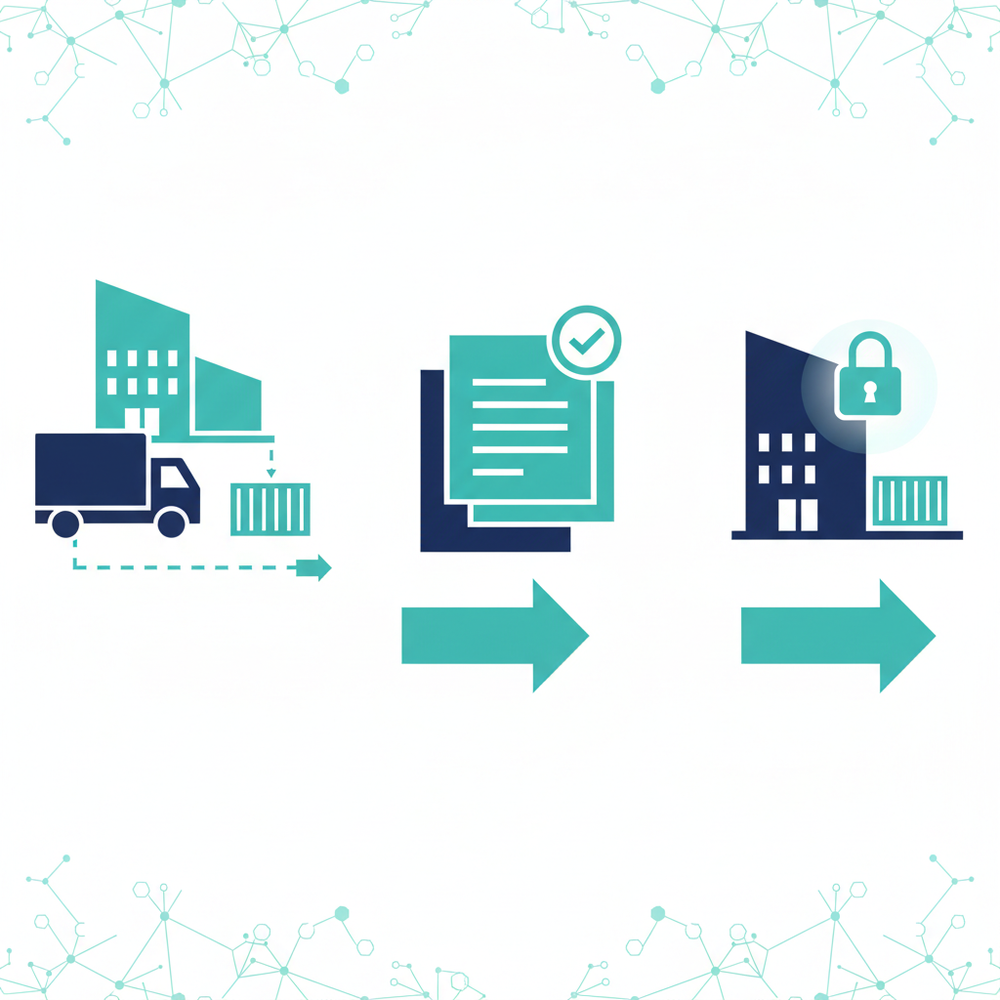
A lumper fee of $275 appears on a carrier invoice. The broker checks the delivery receipt on file. It has a consignee signature but no lumper receipt attached and no notation of third-party unloading. Without documentation that a lumper was actually used (or wasn't), the broker has no factual basis to dispute the charge. The $275 gets paid. Whether the lumper service actually occurred is unknowable after the fact. This is a paperwork failure at the dock, not a billing failure at the carrier. The fix: require drivers to note on the delivery receipt whether third-party unloading occurred and attach the lumper receipt before leaving the facility.
Example 3: LTL Shortage Claim Supported by One Line on the Receipt
An LTL shipment moves 5 pallets from a shipper in Dallas to a consignee in Atlanta. The BOL lists 5 pallets. The delivery receipt shows 4 pallets received. The consignee signed with an exception: "4 of 5 pallets received, 1 pallet short." That notation, written and signed at the time of delivery, becomes the legal basis for the freight claim. Without it, the carrier argues the shortage happened after delivery, at the consignee's warehouse, or during the consignee's own handling. The signed exception on the delivery receipt shifts the burden of proof to the carrier.
Example 4: Drayage Dry Run Fee Disproved, $200 Saved
A drayage carrier bills a $200 dry run fee, claiming the container was not available when the driver arrived at the port terminal. The broker has a delivery receipt signed by the terminal showing the container was available and the driver arrived at 10:22 AM. The terminal's stamp on the receipt confirms the container was released to the driver at 10:38 AM. The dry run claim is disproved by the terminal-signed delivery receipt. The $200 charge is rejected. Without that receipt, the broker would have no counter-evidence and the dry run fee would stand.
What Is a Delivery Receipt in Insurance Claims?
Freight insurance claims are where delivery receipts go from "helpful" to "mandatory." When cargo damage occurs and a claim is filed, the insurer's first request is the signed delivery receipt showing the condition of the goods at the time of delivery. As Artsyl Tech explains in their delivery receipt overview, the delivery receipt serves as proof of delivery between seller and buyer, documenting the transfer of goods.
In insurance, the stakes are higher. A "clean" delivery receipt (one signed with no exceptions or damage notations) tells the insurer that the consignee accepted the freight in good condition. Even if damage existed at the time of delivery, a clean receipt weakens the claim significantly. Some insurers will reduce or deny payout entirely if the delivery receipt doesn't note the damage.
This is why training consignees and dock workers to note exceptions at the time of signing is critical. The delivery receipt is not just a billing document. It's a liability document. If the receiver signs clean and discovers damage later, the delivery receipt works against them.
Frequently Asked Questions About Delivery Receipts in Freight
What is a delivery receipt?
In freight, a delivery receipt is a signed document confirming that a shipment was physically received by the consignee at the delivery location. It records the date, time, piece count, condition of goods, and any exceptions or discrepancies observed at the dock. It serves as the primary evidence of delivery completion and is required for carrier payment, dispute resolution, and freight claims.
How do you create a delivery receipt for freight?
Start with your TMS or a standardized template that includes fields for arrival time, departure time, piece count, condition notes, exception notations, reference numbers (PRO, PO, or load number), consignee printed name, title, and signature. The driver should present this document at the receiving dock and ensure it's completed and signed before leaving the facility. Best practice is to photograph or scan the signed receipt and upload it within 2 hours of delivery, per FreightDoc's POD best practices.
What are the three types of receipts in freight?
The three primary receipt documents in freight are the bill of lading (BOL), which serves as the carrier's receipt for freight at pickup; the delivery receipt, which confirms receipt of goods at destination; and the freight bill or carrier invoice, which bills for the transportation service rendered. Each serves a different function, and confusing them leads to gaps in dispute documentation.
Can a carrier get paid without a signed delivery receipt?
Technically, yes, but it weakens the carrier's position and gives the broker grounds to hold payment. Per AWCollects' payment terms guide, a signed delivery receipt is listed as required paperwork for carrier payment. Brokers who pay carrier invoices without a signed delivery receipt on file lose their ability to dispute accessorial charges retroactively.
What happens if a delivery receipt and BOL show different piece counts?
When the delivery receipt shows fewer pieces than the BOL, and the consignee signed with an exception noted, that discrepancy is the basis for a freight shortage claim against the carrier. The BOL documents what was tendered for shipping. The delivery receipt documents what arrived. The difference, supported by the consignee's signature and exception notation, shifts the burden to the carrier to prove the shortage didn't occur during transit.
Sources
- 49 CFR Part 373 — Receipts and Bills — Electronic Code of Federal Regulations
- Delivery of My Shipment (Subpart G) — Federal Motor Carrier Safety Administration
- Proof of Delivery Best Practices for Freight Brokers — FreightDoc
- Managing Freight Claims: A Step-by-Step Guide — Somerset Logistics
- Freight Broker Documents: 10 Important Forms — Truckstop.com
- Freight Broker Payment Terms Best Practices — AWCollects
- How To Optimize Your Freight Receiving — Unishippers
- Delivery Receipt Form: What Is a Delivery Slip — Artsyl Tech
Stop Losing Disputes You Should Be Winning
Every freight dispute comes down to documentation, and the delivery receipt is the single most important document you have after the load delivers. It's not a formality. It's your billing evidence, your claims foundation, and your defense against inflated accessorial charges. The brokers who win disputes are the ones who can pull a timestamped, signed, exception-noted delivery receipt within minutes, not days.
If your team processes more than 50 carrier invoices a week and you're still matching delivery receipts to invoices manually, automated document extraction tools can pull timestamps, piece counts, and exception notes from delivery receipts and flag mismatches against carrier invoices before you approve payment. The dispute you catch before you pay is the one that protects your margin.
Related: How to Extract Data from Proof of Delivery (And Stop Losing Money)
Related: POD Automation Software That Stops Carrier Overbilling Cold