Proof of Delivery in Freight: What Holds Up in a Dispute
Researched and written with AI assistance. Reviewed by the Laneproof team.
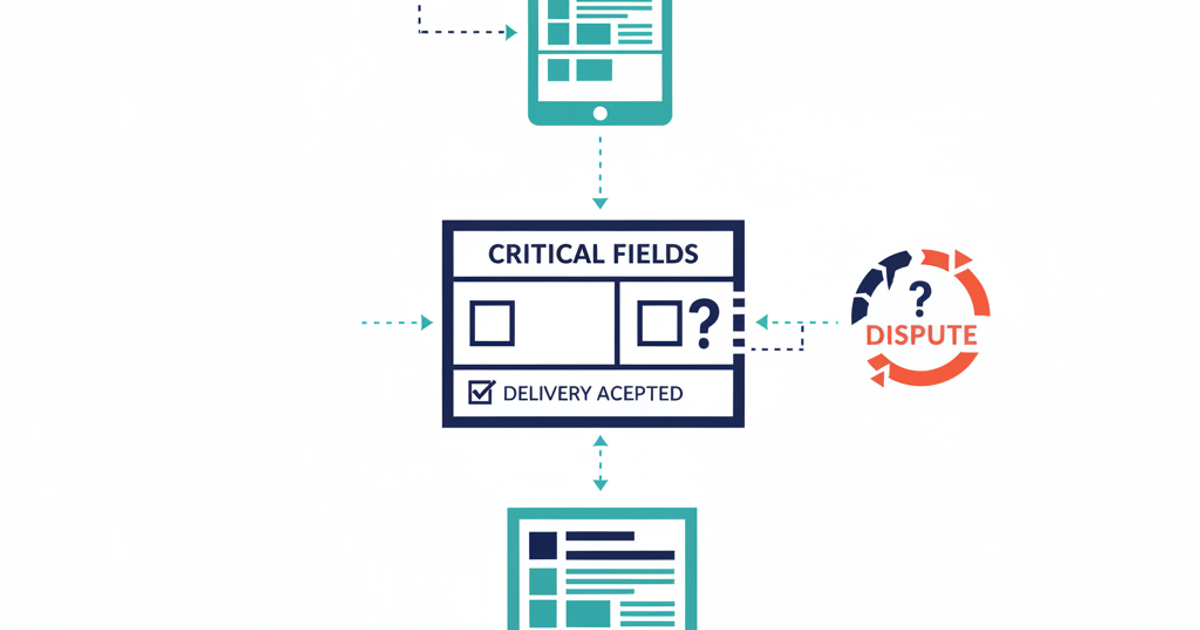
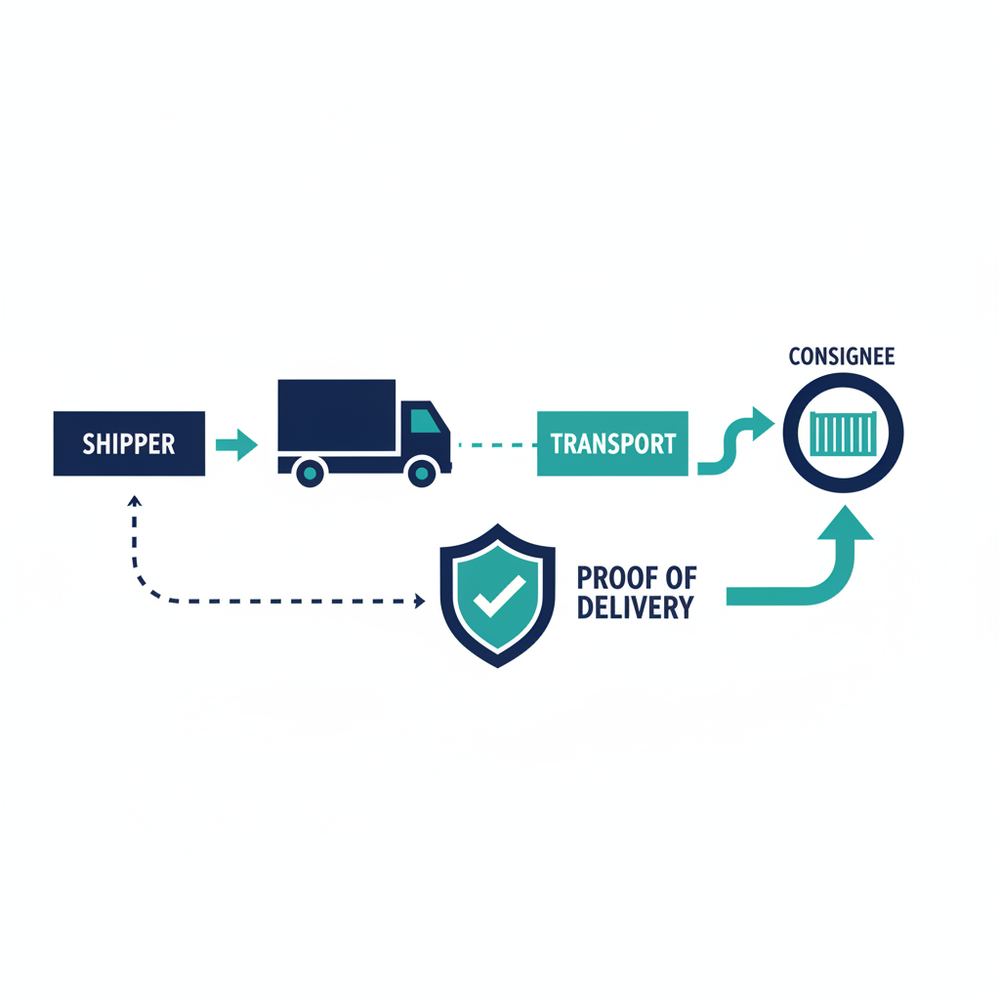
A proof of delivery is a document that confirms freight was delivered to the consignee at a specific location, date, and time, signed by an authorized recipient. In freight brokerage, accepted POD formats include a signed delivery receipt, a bill of lading (BOL) with receiver signature, a photo with GPS timestamp, or an electronic confirmation with geolocation metadata. But here is the part most guides skip: not all of these formats carry the same weight when a carrier disputes your challenge on a detention charge, a lumper fee, or a weight overage.
The proof of delivery market hit $3.2 billion globally in 2024, with North America accounting for roughly 38% of that revenue, according to MarketIntelo. That spending reflects a simple truth: the companies investing in better POD collection are the ones winning billing disputes. The ones still pulling delivery photos out of a group text chain are the ones eating $400 detention charges they could have fought.
This guide covers which POD fields actually matter in a dispute, which document formats hold up under pressure, and how to collect and store delivery documentation so you can shut down overbilling before it hits your margin.
What Is Proof of Delivery in Freight (And What Actually Counts)?
Every freight broker knows what a POD is in the abstract. The problem is that "proof of delivery" means different things depending on who is looking at it and why. Your TMS might flag a load as delivered when the carrier uploads a blurry photo. Your billing team might consider a load closed when the BOL comes back signed. Neither of those things automatically means you have documentation strong enough to dispute a $275 lumper fee or a $620 TONU charge.
The legal baseline for delivery documents
Federal regulations set a floor for what delivery documentation must include, and more importantly, what it cannot include. Under 49 CFR Part 375, carriers are required to prepare and issue a bill of lading before receiving a shipment, establishing the regulatory foundation for all downstream delivery documentation. The FMCSA goes further: according to their guidance on delivery receipts and shipping documents, a delivery receipt or shipping document must not contain language that releases or discharges the carrier or its agents from liability. That detail matters. If a carrier hands your consignee a delivery receipt with a liability waiver buried in the fine print, and your receiver signs it, that clause is not enforceable under federal rules.
This is the kind of detail that separates a POD that holds up in a dispute from one that looks official but gives you nothing to work with.
What formats actually count as proof of delivery
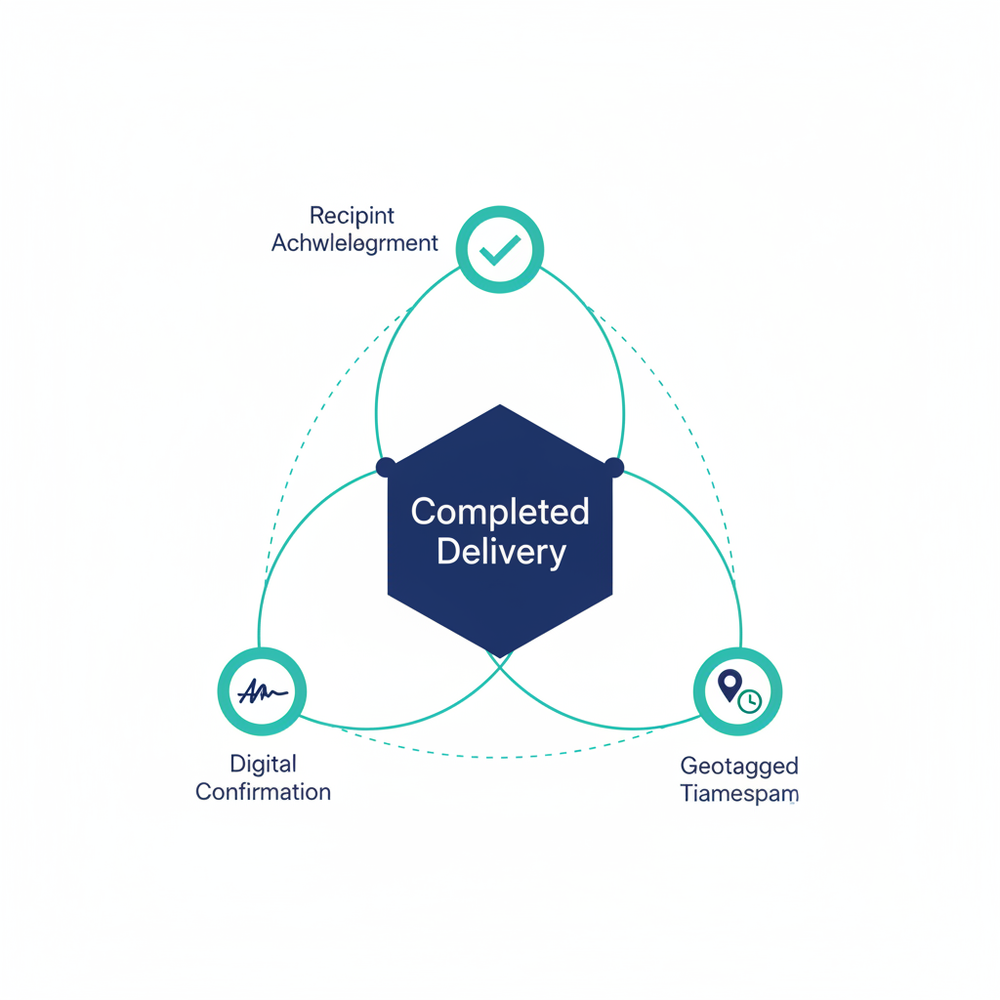
According to DTS, a valid POD verifies three core facts: the cargo's location at time of delivery, the date and time of delivery, and the identity of the person who signed for it. Based on that standard, these are the formats that count:
- Signed delivery receipt with printed name, date, and time of delivery
- Bill of lading (BOL) with receiver signature and any exception notations
- Electronic POD (ePOD) with GPS coordinates, timestamp, and digital signature
- Photo POD with embedded geotag and timestamp metadata
- Driver log or ELD data corroborating delivery time (supporting evidence, not standalone POD)
A photo of a dock door with no timestamp is not proof of delivery. A text message from the driver saying "dropped" is not proof of delivery. A signed BOL with no date is incomplete. The format matters less than the fields it contains.
The Fields on a POD That Carriers Count On You to Miss
Here is where the money is. Carriers do not typically overbill because they are dishonest. They overbill because the documentation is ambiguous enough to support their version of events. A detention charge only sticks if you cannot prove otherwise. A weight overage only holds if you did not capture the right data at delivery. The fields on your POD are your evidence, and the ones you skip are the ones that cost you.
Arrival time vs. delivery time
Most POD templates capture the delivery timestamp: the time the freight was signed for. Very few capture the arrival timestamp: the time the driver checked in at the facility. That gap is where detention charges live. If a carrier invoices $400 for four hours of detention, and your POD shows a delivery time of 2:15 PM but no arrival time, you have no way to calculate actual wait time. You cannot prove whether the driver arrived at 10:00 AM or 1:45 PM. The charge stands.
According to FreightDoc's best practices for freight brokers, requiring both arrival and departure timestamps on the delivery receipt is one of the simplest ways to protect against inflated detention claims. Yet most brokers do not enforce it.
Printed name alongside signature
A signature alone is often not enough. If a dispute escalates to arbitration, the first question is: who signed for this? A scribble on a line proves someone was there. A printed name underneath it proves who. Without a printed name, the carrier can argue the signatory was not authorized to accept delivery on behalf of the consignee, and your POD becomes weaker evidence.
Exception notations at time of delivery
If freight arrives damaged, short, or with a weight discrepancy, that exception must be noted on the POD or BOL at the time of delivery. As FreightPros notes in their guide on delivery receipts, notating freight exceptions at the point of delivery is critical for filing claims and disputing charges later. Once the driver leaves the dock and the receiver signs a clean POD, your leverage to dispute damage or shortage claims drops to nearly zero.
Weight and piece count
The rate con might say 42,000 lbs. The BOL at origin might confirm it. But if the signed BOL at delivery shows 44,200 lbs and no one noted the discrepancy, the carrier has a paper trail supporting a weight overage charge. A countersigned POD with the original weight and a noted exception would have given you grounds to dispute. Without it, you are paying the difference.
Digital vs. Paper POD: Which One Holds Up When a Carrier Pushes Back
This is not a technology preference question. It is a defensibility question. When a carrier challenges your dispute, the strength of your evidence depends on whether the document can be verified independently. That is where the gap between paper and digital POD becomes a real dollar issue.
Paper delivery receipts: familiar but fragile
Paper PODs are still common, especially with smaller carriers. A handwritten signature on a printed delivery receipt is better than nothing. But paper has three structural weaknesses in a dispute:
- No independent timestamp. The date and time are whatever someone wrote down, and there is no way to verify them after the fact.
- No geolocation. You cannot prove where the document was signed.
- Degradation and loss. Paper gets crumpled in a cab, left at a dock, or uploaded as a barely legible scan three weeks later.
In an arbitration scenario, a paper POD with a handwritten timestamp is the word of whoever filled it out. That is not zero evidence, but it is not strong evidence either.
Electronic POD: metadata is the differentiator
An electronic POD with a geotag and timestamp carries weight because the metadata is generated by the device, not entered by a person. It cannot be backdated. It cannot be altered without leaving a digital trail. In a dispute, an ePOD with embedded GPS coordinates and a device-generated timestamp is significantly harder for a carrier to challenge than a handwritten signature on a paper receipt.
APQC, the benchmarking organization, tracks the percentage of deliveries completed with electronic proof of delivery as a recognized supply chain performance measure, including customer electronic signoff and delivery snapshots. This metric exists because the industry recognizes that ePOD is not just a convenience upgrade. It is a defensibility upgrade.
As DispatchTrack outlines in their POD best practices, digital POD best practices include capturing photos, notes, and signatures at the point of delivery, all with device metadata. That combination creates a multi-layered evidence record that holds up under scrutiny.
Electronic POD with a geotag and timestamp versus a handwritten signature on a paper delivery receipt: in an arbitration scenario, the electronic record with metadata wins because it cannot be backdated.
How to Use POD as Evidence in a Carrier Invoice Dispute
Having a good POD is step one. Knowing how to use it against an inflated invoice is where the margin recovery actually happens. Here is the operational sequence that works.
Step 1: Match the invoice line item to the rate con
Before you even look at the POD, compare the carrier invoice to the rate confirmation. Identify every charge that was not on the original rate con: detention, lumper fees, weight overages, layover, TONU. Those are the line items you need POD evidence to either confirm or dispute.
Step 2: Pull the POD and BOL for the specific load
This is where storage and searchability matter. If your PODs are organized by load number in a central system, this takes 30 seconds. If they are buried in email threads, driver text chains, or a folder of unsorted scans, this step alone can take 15 to 20 minutes per load. Multiply that by 50 disputed invoices a month and you are looking at a full-time job.
For operations processing high volumes of freight documents, automated document data extraction can cut that retrieval and matching time from minutes to seconds per load.
Step 3: Check the POD fields against the disputed charge
This is the critical step. For each disputed line item, ask:
- Detention charge: Does the POD show both an arrival time and a delivery time? Can you calculate actual wait time?
- Lumper fee: Is there a signed receipt from the lumper service on the delivery receipt or BOL? Did the receiver sign acknowledging the fee?
- Weight overage: Does the signed BOL at delivery match the weight on the rate con? Was any discrepancy noted?
- TONU or dry run: Does the POD (including photo or GPS evidence) prove the load was picked up and delivered?
If the POD fields support your position, you have evidence to push back. If the fields are missing or incomplete, you are negotiating from a weak position.
Step 4: Send the dispute with documentation attached
When you send the dispute back to the carrier, attach the specific POD, the BOL, and the rate con. Highlight the fields that contradict their charge. Do not send a vague email saying "we disagree with this charge." Send the documents, point to the data, and state the dollar amount you are disputing. Carriers resolve documented disputes faster because they know the evidence is clear.
Where POD Breaks Down and How Brokers Get Left Holding the Bill
The most expensive POD failures are not dramatic. They are mundane. A missing field here, a lost document there, a photo with no timestamp. These small gaps add up to real money every month. Here are the scenarios that cost brokers the most.
Example: The $400 detention charge with no arrival time
A carrier invoices $400 in detention on a load. The POD shows a delivery timestamp of 3:45 PM. But there is no arrival time recorded anywhere: not on the POD, not on the BOL, not in the TMS. The broker believes the driver arrived at 3:00 PM, making the actual wait time 45 minutes (well within free time). But without documented proof of arrival, the broker cannot dispute the carrier's claim of a four-hour wait. The $400 charge stands because one field was missing.
Example: The $275 lumper fee with no paper trail
A carrier invoices a $275 lumper fee. The delivery receipt has no signature from the lumper service. The BOL has no notation about unloading assistance. The broker has no documentation to confirm or deny that a lumper was used, what they charged, or whether the consignee authorized it. Without any of those records, the broker eats the cost. A single line on the POD noting "lumper used, $275, signed by [name]" would have given the broker either confirmation or grounds to dispute.
Example: $1,140 per month lost to unsearchable POD storage
A 2-truck operation running 300 loads per month stores POD as photos in a driver group text chain. When a carrier dispute comes in, the billing coordinator scrolls through hundreds of messages to find the right photo. Most of the time, they cannot find it within a reasonable timeframe, or the photo has no timestamp metadata because it was forwarded between phones. The result: an average of $1,140 per month in unchallenged accessorial charges. Not because the charges were valid, but because the documentation was inaccessible. The POD existed. It just could not be found or used.
Example: Weight overage on a signed BOL with no exception noted
The rate con lists the shipment weight at 42,000 lbs. At delivery, the receiver signs the BOL showing 44,200 lbs, but does not note the weight discrepancy as an exception. The carrier invoices a weight overage surcharge. The broker could have disputed this with a countersigned POD that noted the discrepancy at delivery and referenced the original rate con weight. Instead, the signed BOL with the higher weight and no exception notation becomes the carrier's evidence. The surcharge sticks.
Example: TONU recovered with GPS photo evidence
A carrier invoices a $620 TONU charge, claiming the shipper canceled and the load was a dry run. The broker pulls a GPS-timestamped photo POD from the driver's app showing the load was picked up at the origin facility, with geolocation and time metadata embedded in the image. The photo directly contradicts the carrier's dry run claim. The broker sends the photo with the metadata to the carrier, and the $620 charge is removed. This is what defensible POD looks like in practice: metadata that cannot be argued away.
The compounding cost of weak POD across a book of business
Consider this math. If carriers overbill on accessorials at a rate of even 3.8% of total invoice value, on a $25,000 per month carrier spend that comes to $950 per month in charges that need documentation to fight. Over a year, that is $11,400. For a broker running $100,000 per month in carrier spend, it is $45,600 annually. The difference between recovering that money and losing it is whether your POD documentation has the right fields, the right format, and the right storage system.
Frequently Asked Questions About Proof of Delivery
What is considered a proof of delivery?
A proof of delivery is any document that confirms freight was delivered to the consignee at a specific location, on a specific date, and was signed for by an authorized recipient. According to DTS, a valid POD verifies the cargo's location, the date and time of delivery, and who signed for it. Accepted formats include signed delivery receipts, countersigned bills of lading, electronic PODs with GPS metadata, and photo PODs with embedded timestamps.
What can be used as proof of delivery in a carrier dispute?
In a carrier billing dispute, the strongest proof of delivery is an electronic document with device-generated metadata: GPS coordinates, timestamps, and a digital signature. Paper delivery receipts and signed BOLs also count, but they carry less weight because dates and times are manually entered and cannot be independently verified. Supporting evidence like ELD data, dock check-in logs, and lumper receipts can strengthen your case when paired with the primary POD.
How long should freight brokers keep proof of delivery records?
According to Abraham Watkins' overview of freight broker document retention, freight brokers should retain POD-related records along with rate confirmations, BOLs, carrier packets, and invoices. While specific retention periods can vary by state and contract terms, the general industry practice is to keep all load documentation for a minimum of three years. For brokers who handle claims-prone freight, longer retention is advisable.
Is a photo enough to count as proof of delivery?
A photo can serve as proof of delivery, but only if it includes embedded metadata: specifically a GPS geotag and a device-generated timestamp. A photo without metadata is just an image of a dock or a pallet. It does not prove where or when it was taken. As DispatchTrack notes, photo POD best practices require capturing images at the point of delivery with full device metadata intact. A forwarded or screenshot photo typically loses that metadata and becomes much weaker evidence.
What is the difference between a POD and a BOL?
A bill of lading (BOL) is issued at origin and travels with the freight. It details the shipment contents, weight, origin, destination, and carrier. A proof of delivery is generated at the destination and confirms the freight arrived. In practice, the BOL often doubles as the POD when the receiver signs it at delivery. The key distinction: a BOL without a receiver signature is not a POD. A POD without referencing the BOL's shipment details is incomplete. Together, they form the full documentation chain for a load.
Sources
- Delivery of My Shipment (Subpart G) — FMCSA
- 49 CFR Part 375: Transportation of Household Goods — eCFR
- What is a proof of delivery (POD) in supply chain? — project44
- Proof of Delivery Platform Market Research Report 2033 — MarketIntelo
- Percentage of deliveries with electronic proof of delivery — APQC
- Proof of Delivery Best Practices for Freight Brokers — FreightDoc
- What Is Proof of Delivery and Why Is it Important? — DTS
- P.O.D. Proof of Delivery & Delivery Receipts — FreightPros
- 5 Steps to Perfecting Your Proof of Delivery (POD) — DispatchTrack
- Knowing What Documents a Freight Broker Must Keep — Abraham Watkins
Stop Losing Disputes You Should Be Winning
The difference between a broker who recovers disputed charges and one who eats them is almost never about who is right. It is about who has the documentation. The right POD fields (arrival time, printed name, exception notations, weight confirmation) collected in the right format (electronic with metadata, not a photo in a text thread) and stored in a searchable system give you the evidence to push back on every inflated detention charge, phantom lumper fee, and fabricated TONU.
Start with the basics: require both arrival and delivery timestamps on every POD. Insist on printed names next to signatures. Note exceptions at the dock before the driver leaves. Store everything by load number where your billing team can find it in under a minute.
If your team processes more than 50 invoices a week, automated freight document extraction tools can pull the fields from every POD, BOL, and delivery receipt and match them to your rate cons, so the discrepancies get flagged before you pay. That is how you stop losing $950 a month to charges you had the right to dispute all along.
Full guide: POD in Freight: What It Is and Why a Bad One Costs You