Delivery Confirmation in Freight: What Actually Holds Up in a Dispute
Researched and written with AI assistance. Reviewed by the Laneproof team.
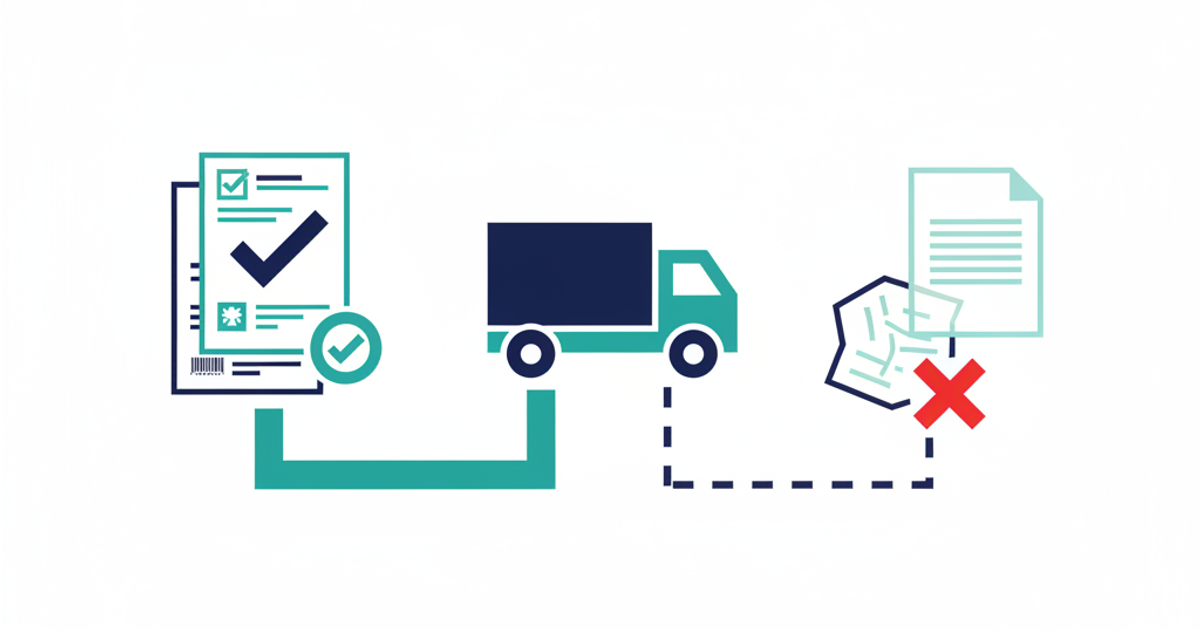
A broker we spoke with lost a $200 TONU dispute last quarter for one reason: no delivery confirmation showing the load was actually tendered and refused. The carrier submitted the charge, the broker had no signed rate con acknowledgment, and the money was gone. On the other end of the spectrum, another broker recovered $1,100 in a single billing cycle by matching signed PODs against carrier invoices and flagging three loads where detention was billed but delivery timestamps showed under two hours at the dock. The difference between these outcomes is not luck. It is documentation. Delivery confirmation in freight is the specific set of documents, signatures, and timestamps that prove a shipment was received by the intended consignee, at a verified time, in an agreed condition. It is not a USPS tracking status. It is the evidence that wins or loses your next carrier billing dispute.
What Delivery Confirmation Actually Means in Freight (Not the USPS Version)
If you search "delivery confirmation" right now, you will find page after page about USPS tracking numbers and postal service add-ons. That is not what we are talking about. In freight, delivery confirmation is the documented proof that a shipment was physically received by the consignee at the delivery location, typically captured through a combination of signed documents, timestamps, and condition notes. As ShipEngine's documentation on delivery confirmation explains, delivery confirmation goes beyond tracking status and verifies that a package has been received by its intended recipient. In LTL and truckload freight, this verification is not a nice-to-have. It is the foundation of every billing dispute you will ever file.
For brokers managing 100 to 5,000 loads per month, the stakes compound fast. Every load without proper delivery confirmation is a load where a carrier can bill detention, lumper fees, or accessorials and you have no paper trail to push back. Every load with a clean, timestamped, signed proof of delivery (POD) is a load where you control the narrative. The distinction matters because carriers know which brokers check and which ones do not.
Why the Postal Definition Misleads Freight Brokers
The postal version of delivery confirmation tells you a package arrived at an address. Freight delivery confirmation tells you who signed for it, when they signed, what condition the freight was in, and whether any exceptions were noted. These details are what separate a $0 dispute resolution from a $450 detention charge you cannot fight. According to the FMCSA's guidance on shipment delivery procedures, the delivery receipt and signing process creates a legal record of the transaction between carrier and consignee. In freight, that legal record is your defense. Without it, you are relying on a carrier's version of events.
The Four Documents That Hold Up When You Push Back on a Carrier Invoice
Not every piece of paper in a carrier packet carries the same weight. When you are disputing a detention charge, a lumper fee, or an accessorial that was never authorized, four documents consistently hold up. Everything else is supporting evidence at best.
1. The Signed Bill of Lading (BOL)
The bill of lading (BOL) is the single most important document in freight. When it is signed at delivery with a timestamp, printed name, and any exception notes, it becomes the primary record of what happened at the dock. A signed BOL with a clear timestamp is what won a broker a $450 detention dispute when a carrier claimed a 3-hour wait. The BOL showed 47 minutes of dock time. Dispute over. As FreightDoc's proof of delivery best practices note, a printed name next to a signature block is preferred over a signature alone, because a signature without a printed name creates problems if a consignee later disputes receipt. This is a small detail that matters enormously when the dispute lands on your desk three weeks later.
Your BOL should include, at minimum: the shipper and consignee names, the delivery date and time (both arrival and departure if possible), a printed name and signature of the person accepting the freight, any notes about damaged or missing items, and the BOL number that ties it to the load in your TMS. For more on how a signed delivery receipt functions as billing evidence, see what a signed delivery receipt actually does in a freight dispute.
2. The Proof of Delivery (POD)
The POD is the carrier's confirmation that delivery was completed. It may be a separate document from the BOL, or it may be the signed copy of the BOL returned to the broker. Either way, the POD is what your billing team uses to close out the load and authorize payment. A POD that includes a signature, a timestamp, and a reference number matching the BOL is a strong document. A POD that is just a carrier-generated status update saying "delivered" is not. Truckstop.com's overview of freight broker documents places the POD among the most critical documents in the shipment lifecycle, and for good reason: it is the final checkpoint before money changes hands. If you want a deeper breakdown of what makes a POD defensible versus disposable, read POD in freight: what it is and why a bad one costs you.
3. The Rate Confirmation (Rate Con)
The rate confirmation establishes what was agreed to before the load moved. It defines the linehaul rate, any pre-approved accessorials, detention terms, and TONU provisions. When a carrier bills for something not listed on the rate con, the rate con is your first line of defense. As FreightWaves reports on rate confirmation practices, the fine print in a rate confirmation is where disputes are won or lost. Brokers who treat the rate con as a formality instead of a binding agreement leave themselves exposed. For a detailed look at what brokers commonly miss, see rate confirmation: what brokers get wrong and what it costs.
4. The Lumper or Accessorial Receipt
Lumper fees, detention charges, and other accessorials require their own receipts. A lumper receipt should be signed by the facility where the service was performed, include the dollar amount, and reference the load or BOL number. Without this, the charge is just a number on a carrier invoice. Example: a carrier billed $275 for a lumper fee on a recent load. No signed lumper receipt. No signature from the shipper or receiver. The broker deducted the charge because the carrier could not produce a receipt tying the fee to the specific delivery. That $275 stays in the broker's margin.
What Gets Thrown Out: Confirmation Methods That Won't Save You in a Dispute
Knowing what works is only half the picture. Brokers also need to know what feels like proof but falls apart under scrutiny. These are the delivery confirmation methods that routinely get rejected in carrier billing disputes.
Driver Notes on the Invoice
A carrier invoice that says "waited 3 hours at dock" in the notes field is not evidence. It is a claim. Without a countersigned document from the consignee confirming the wait time, driver notes are one-sided testimony. They carry zero weight in a formal dispute. This is exactly what happened in the $450 detention scenario above. The carrier's only evidence was a driver note. The broker's signed BOL told a different story.
Photos Without Context
Photo confirmation is increasingly common, especially with carrier apps that let drivers snap a picture at delivery. But a photo alone, without a signature or timestamp tied to the BOL number, has been rejected in cargo claim reviews because it could not be matched to the specific shipment. A photo of pallets on a dock proves pallets were on a dock. It does not prove which load they belonged to, when they arrived, or who accepted them. Photos are useful as supplementary evidence when attached to a signed POD. On their own, they are not enough.
GPS Pings Without Corresponding Signatures
GPS data showing a truck was at a facility for four hours looks compelling. But GPS proves the truck was there, not that the freight was being unloaded the entire time. A driver could have arrived early, parked, and waited for a dock appointment. Without a check-in timestamp signed by the receiver and a check-out timestamp on the BOL, GPS alone does not establish billable detention time.
Electronic PODs Not Linked to the Load
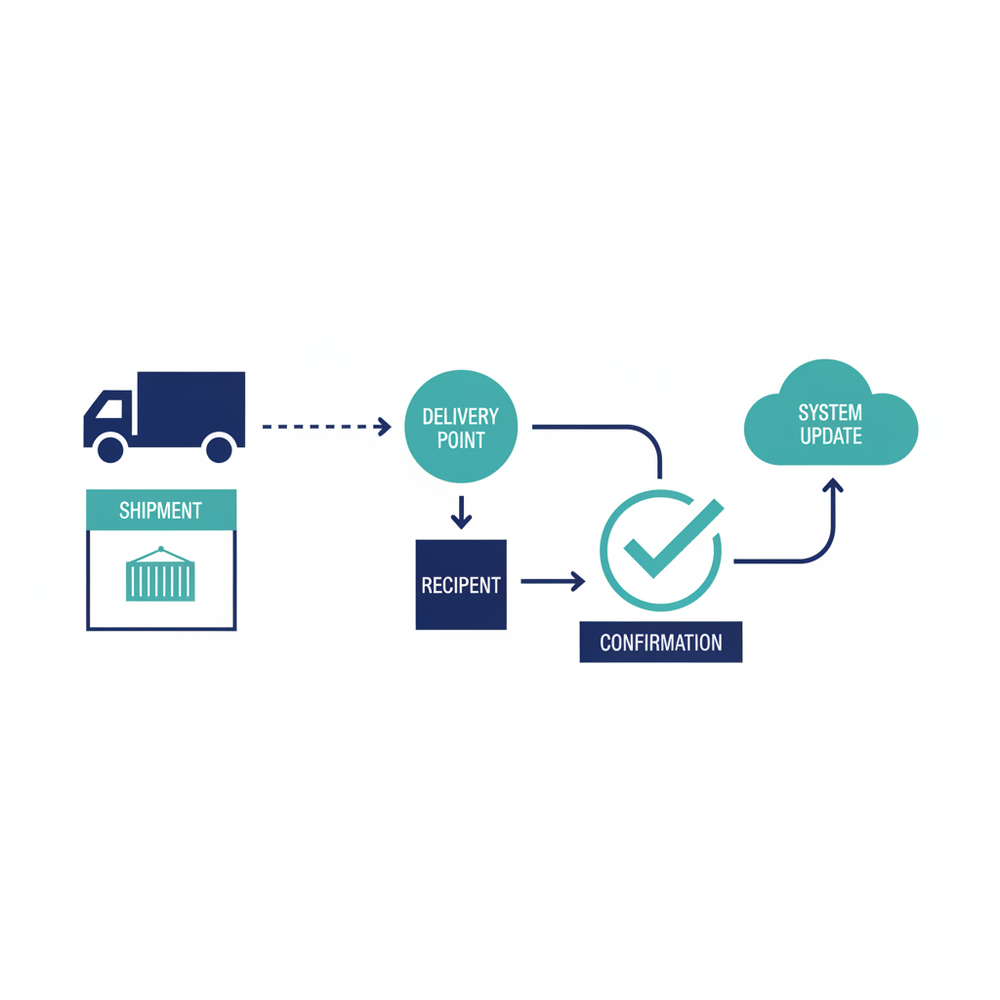
This is a growing problem. A carrier captures an electronic POD through their app, but it is not linked to the load in the broker's TMS. When the dispute comes weeks later, the broker's team spends hours hunting for the file. In one case, a broker spent 4 hours tracking down an ePOD that existed but was not indexed to the right load number. That is 4 hours of ops time burned on a single invoice dispute. The document existed. The workflow to find it did not.
How to Collect the Right Proof at Every Stop Without Slowing Down Your Ops
The biggest pushback brokers have about documentation is time. Your dispatchers are managing 30, 40, 50 loads at a time. They do not have the bandwidth to chase down perfectly formatted paperwork on every delivery. That is fair. But there is a difference between perfect documentation and defensible documentation. Here is how to collect what you need without grinding your operation to a halt.
Set the Expectation at Tender
The rate confirmation is your first opportunity to define documentation requirements. Include explicit language requiring the carrier to return a signed BOL with printed name, timestamp, and any exception notes within 24 to 48 hours of delivery. As SPI 3PL's freight shipment lifecycle overview notes, best practice for freight invoicing is to submit within 24 to 48 hours of delivery with all paperwork attached, including proof of delivery confirmation. If you put this expectation in the rate con, you have a contractual basis to withhold payment until proper documentation is received. That changes carrier behavior fast.
Require Printed Names, Not Just Signatures
This is the simplest change you can make with the biggest impact. Tell your carriers that every signed BOL and POD must include a printed name next to the signature. A scribble on a line is hard to verify. A printed name creates accountability. If a consignee later claims they never received the freight, a printed name gives you a specific person to reference. Per FreightDoc's best practices, this one step significantly strengthens your position in disputes.
Use a Document Checklist at Load Close-Out
Before your billing team authorizes payment on any load, they should check four things:
- Signed BOL with printed name and timestamp: present and legible?
- POD matching the BOL number: received and indexed to the load?
- Rate con on file: does the carrier invoice match the agreed rates and accessorials?
- Accessorial receipts (if applicable): signed by the facility, with dollar amount and load reference?
If any of these are missing, the load stays open until the carrier provides them. This is not being difficult. It is protecting your margin.
Index Every Document to the Load Number Immediately
The 4-hour ePOD hunt described earlier is not unusual. It happens every day in freight offices across the country. The fix is simple in theory and hard in practice: every delivery confirmation document needs to be indexed to the load number in your TMS the moment it comes in. Whether your team does this manually or uses automated document extraction tools, the goal is the same. When a dispute lands on your desk, you should be able to pull the signed BOL, POD, rate con, and any accessorial receipts for that load in under two minutes. If it takes longer than that, your documentation process has a gap that carriers will eventually find.
Real Scenarios: How Missing or Weak Confirmation Cost Brokers Real Money
Theory is helpful. Numbers are better. Here are real-world scenarios that show exactly how delivery confirmation quality translates to dollars gained or lost.
Scenario 1: Detention Dispute Won With a Timestamped BOL
The situation: A carrier submitted an invoice with a $450 detention charge, claiming the driver waited 3 hours at the consignee's dock. The only supporting documentation was a driver note on the carrier's invoice. The broker's evidence: A signed BOL with a printed receiver name and timestamps showing arrival at 10:14 AM and departure at 11:01 AM. Total dock time: 47 minutes. The result: The broker disputed the charge and provided the signed BOL. The carrier could not produce any countersigned documentation supporting the 3-hour claim. The $450 charge was removed. Total time to resolve: 15 minutes, because the BOL was already indexed to the load in the TMS.
Scenario 2: Lumper Fee Deducted for Lack of a Signed Receipt
The situation: A carrier billed a $275 lumper fee on a load delivered to a grocery distribution center. The broker's response: The broker requested a signed lumper receipt showing the facility name, the dollar amount, and a signature from the shipper or receiver confirming the service was performed. The result: The carrier could not produce a signed receipt. The broker deducted the $275 from the carrier's payment. No further dispute. The key here is that the broker had a standard policy: no signed receipt, no reimbursement. The carrier knew the rules and could not meet them.
Scenario 3: TONU Charge Lost Due to Missing Rate Con Acknowledgment

The situation: A carrier charged a $200 TONU after claiming the load was tendered and refused at pickup. The broker believed the load was cancelled before the carrier dispatched. The problem: The broker did not have a signed rate con acknowledgment confirming the cancellation. There was no delivery confirmation showing the load was actually tendered and refused, but there was also no paper trail proving the broker cancelled in time. The result: The broker paid the $200 TONU. The dispute was unwinnable because neither side had definitive documentation. A signed rate con with a clear cancellation timestamp or a refused-delivery confirmation from the shipper would have resolved this in the broker's favor.
Scenario 4: The Compound Cost of Accessorial Overbilling
For brokers processing 500 loads per month at an average invoice of $1,800, even a small percentage of overbilling adds up. If carriers overbill on accessorials at an average rate of 3.8% per invoice, that represents $34,200 in potential monthly overbilling exposure. Over a year, that is $410,400. Not every one of those charges is illegitimate. But without proper delivery confirmation documents to compare against carrier invoices, you cannot tell the difference between a valid charge and an overbill. The brokers who catch these discrepancies are the ones whose billing teams can pull a signed BOL, check the detention timestamps, compare against the rate con, and flag the mismatch in minutes. For a deeper look at how POD quality directly affects dispute outcomes, see proof of delivery in freight: what holds up in a dispute.
A broker recovered $1,100 in a single billing cycle by matching signed PODs against carrier invoices and flagging three loads where detention was billed but delivery timestamps showed under two hours at the dock.
Frequently Asked Questions About Delivery Confirmation in Freight
What is delivery confirmation in freight?
In freight, delivery confirmation is the documented proof that a shipment was physically received by the consignee. It typically includes a signed bill of lading (BOL) with a printed name and timestamp, a proof of delivery (POD) document, and any accessorial receipts. Unlike postal delivery confirmation, which is a tracking status, freight delivery confirmation creates a legal and financial record used to verify billing, resolve disputes, and close out loads. As ShipEngine's documentation notes, it goes beyond tracking to verify that the intended recipient actually received the shipment.
What is a delivery confirmation called in trucking?
In trucking and freight brokerage, delivery confirmation is most commonly referred to as "proof of delivery" or "POD." It may also be called a "signed delivery receipt" or simply the "signed BOL." The term used depends on the specific document: the BOL signed at delivery, the carrier's POD form, or an electronic delivery confirmation captured through a carrier's mobile app. Regardless of the name, the function is the same: proving the freight was delivered, when, and to whom.
How much does missing delivery confirmation cost a freight broker?
The cost depends on your load volume and how aggressively carriers bill accessorials. On a single load, a missing delivery confirmation can cost anywhere from $200 (a TONU you cannot dispute) to $450 or more (a detention charge you cannot refute). At scale, brokers processing 500 loads per month at an average invoice of $1,800 could face $34,200 per month in potential overbilling if they lack the documentation to verify charges. The real cost is not just the money lost on individual disputes. It is the margin erosion that accumulates month over month when your team cannot prove discrepancies quickly.
Are electronic delivery confirmations legally valid?
Yes, in most cases. The FMCSA has addressed the validity of electronic documents and signatures in freight through proposed rulemaking, and electronic PODs are widely accepted in the industry. The key requirement is that the electronic document must be tied to the specific load (via BOL or reference number), include an identifiable signature or acknowledgment, and be retrievable when needed. An electronic POD that is not indexed to the load in your TMS is technically valid but operationally useless if you cannot find it during a dispute.
What should I do if a carrier cannot provide delivery confirmation?
If a carrier cannot provide a signed POD, signed BOL, or accessorial receipts when invoicing, you have two options. First, withhold payment on the disputed charges until documentation is provided. Your rate confirmation should include language requiring delivery documentation as a condition of payment. Second, if the carrier still cannot produce the documents, deduct the unsupported charges from the invoice and document your reasoning in writing. This is standard practice. Carriers who consistently fail to provide delivery confirmation should be flagged in your carrier scorecard for future load assignments.
Conclusion: Your Documents Are Your Margin
Every carrier billing dispute comes down to the same question: what can you prove? The brokers who win disputes consistently are not the ones with the biggest legal budgets or the most aggressive negotiators. They are the ones who have a signed BOL with a printed name and timestamp indexed to the load, a POD that matches the BOL number, a rate con that defines what was agreed, and accessorial receipts for every extra charge.
Delivery confirmation in freight is not a tracking status. It is the documented evidence that separates a $450 charge you pay from a $450 charge you reject. Start by requiring printed names on every signature. Add timestamps to every BOL. Index every document to the load number the day it comes in. These are small operational changes that protect real dollars.
If your team processes more than 50 invoices a week and spends hours hunting down PODs and matching them to carrier invoices, automated document extraction tools can cut that retrieval time from hours to minutes, catching the discrepancies covered in this guide before they hit your bottom line.
Sources
- Delivery of My Shipment (Subpart G) — FMCSA
- Delivery Confirmation — ShipEngine
- Electronic Documents and Signatures — FMCSA / Regulations.gov
- Proof of Delivery Best Practices for Freight Brokers — FreightDoc
- Freight Broker Documents: 10 Important Forms — Truckstop.com
- Every Load You Haul Starts Here — Don't Skip the Fine Print — FreightWaves
- Freight Shipment Lifecycle: From Booking to Closeout — SPI 3PL
Related: How to Extract Data from Proof of Delivery (And Stop Losing Money)
Related: POD Automation Software That Stops Carrier Overbilling Cold