Rate Agreement Gaps Carriers Use to Overbill You on Every Load
Researched and written with AI assistance. Reviewed by the Laneproof team.
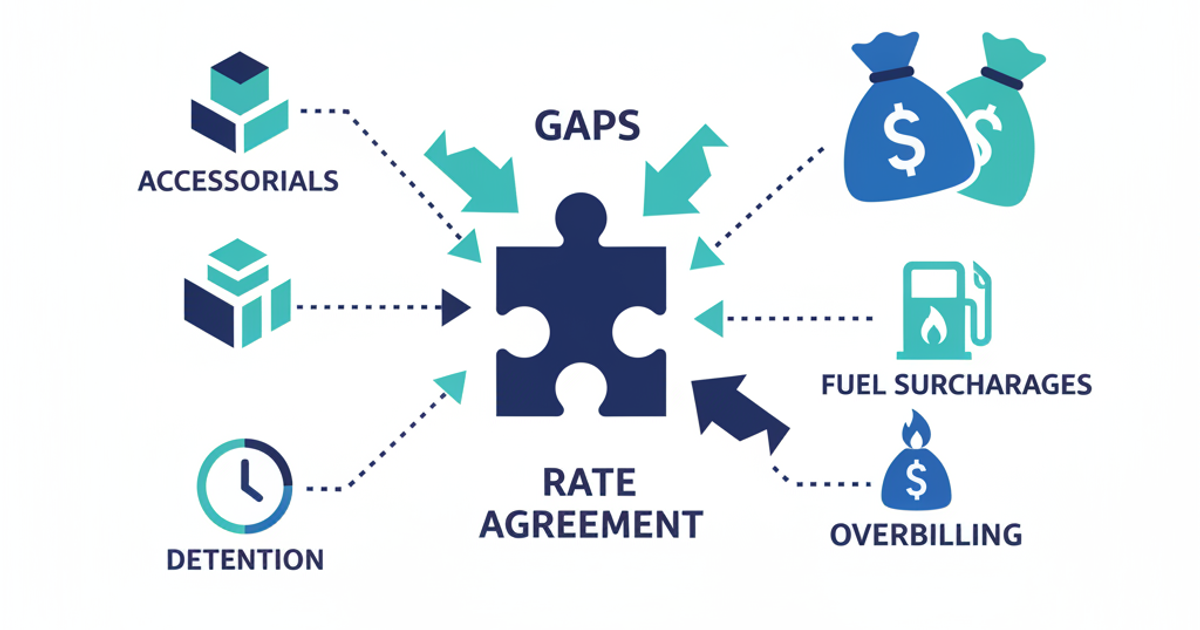
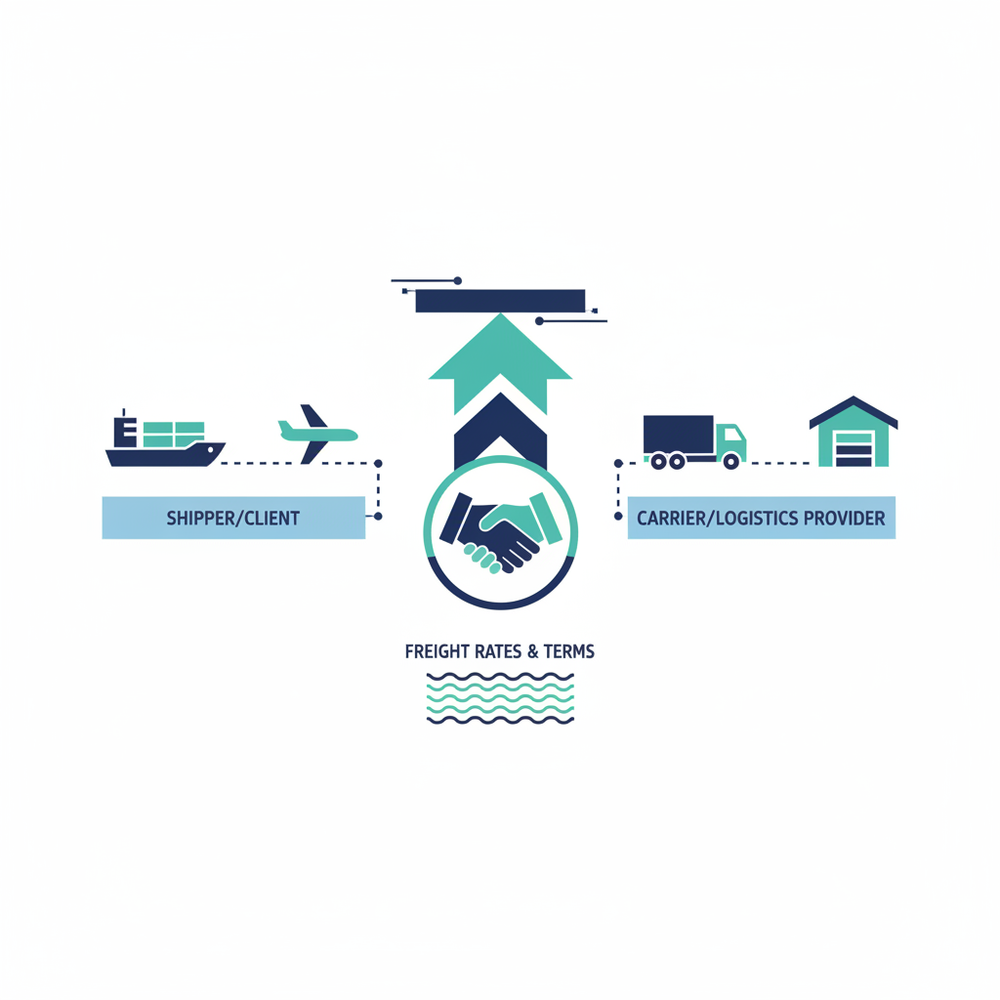
A rate agreement in freight is a written contract between a broker (or shipper) and a carrier that fixes the price, payment terms, and conditions for hauling a load or series of loads. Its purpose is to eliminate ambiguity about what gets paid, when, and under what circumstances. When it fails at that job, carriers bill whatever they want. According to MIT research cited by the DOT Volpe Center, contract rates cover 80 to 95 percent of freight trucking volume. That means most of your loads are governed by some form of rate agreement. The problem is that most of those agreements leave enough gaps for carriers to tack on detention charges, inflated fuel surcharges, surprise lumper fees, and accessorials you never approved. A broker running 500 loads per month at an average overbill rate of 3.8 percent on an $1,800 average linehaul rate (based on Laneproof analysis of 127,000 invoices) loses approximately $34,200 per month to billing discrepancies that go unchallenged.
This article breaks down the specific clauses carriers exploit, shows you how to write a rate agreement that holds up in a dispute, and gives you a step-by-step process for handling invoices that don't match what you agreed to.
What a Rate Agreement Actually Means in Freight (Not the Legal Textbook Version)
If you search "rate agreement" online, you'll get pages about university overhead rates, federal grant accounting, and forward rate agreements in finance. None of that applies to your Tuesday morning when a carrier invoice shows $450 in detention you didn't agree to.
In freight, a rate agreement is the document (or set of documents) that governs what a carrier gets paid for a specific lane, load, or contract period. As ContractsCounsel defines it, a rate agreement is a contract that sets the monetary rate to be paid between a company and a vendor for services. In trucking, that "vendor" is a carrier, and the "services" include linehaul, fuel surcharge, and every accessorial that might come up between pickup and delivery.
What a rate agreement should cover (but usually doesn't)
Most brokers think of a rate agreement as the linehaul rate plus maybe a fuel surcharge table. That's about 60 percent of what it needs to be. A complete freight rate agreement also defines:
- Detention rules: clock-start time, free time window, per-hour rate, and daily cap
- Approved accessorial list: which charges are billable, at what rate, and with what documentation
- Fuel surcharge methodology: which index (DOE, OPIS, etc.), which week's data, and the exact schedule or formula
- Lumper fee terms: reimbursement caps, receipt requirements, and pre-approval process
- TONU and layover language: what triggers each, who pays, and at what flat rate
- Payment terms and dispute windows: how many days to pay, how many days to dispute, and what documentation is required for a valid dispute
When any of these fields are blank or vague, the carrier fills in the number. And it's never in your favor.
Spot rates vs. contract rates: where agreements break down
According to Uber Freight's 2025 rate guide, spot rates are typically lower than contract rates, which are negotiated between shippers and carriers for longer-term agreements. This creates a dual-market structure. Brokers operating mostly on spot tend to rely on a rate con per load rather than a master agreement, which means every single load is a fresh opportunity for billing disputes. Brokers with contract lanes have a master rate agreement in place but often fail to update it when market conditions shift. FreightWaves analysis from November 2025 notes that truckload contract rates have been remarkably stable over the past few years but are expected to be tested over the next 12 months. When contract rates start moving, the gaps in your existing agreements become more expensive.
The Difference Between a Rate Agreement and a Rate Confirmation, and Why It Matters
These two terms get used interchangeably in most freight offices. They shouldn't be. The distinction matters because it determines which document wins in a billing dispute.
Rate agreement: the master terms
A rate agreement (sometimes called a carrier contract or master agreement) covers the ongoing relationship between you and a carrier. It defines the default rules: payment terms, insurance requirements, approved accessorial rates, dispute resolution process, and sometimes lane-specific pricing. Think of it as the baseline. It applies to every load unless a rate confirmation says otherwise.
Rate confirmation: the per-load specifics
A rate confirmation (rate con) is the document issued for a specific load. It includes the pickup and delivery details, linehaul rate, and any load-specific accessorial terms. If the rate con conflicts with the master agreement, the rate con typically governs for that load. This is where problems start. A detailed breakdown of rate confirmation mistakes) shows that brokers frequently issue rate cons that reference a master agreement but override key terms without realizing it, or worse, leave fields blank that the master agreement also doesn't address.
Here's the operational risk: if your rate con says "accessorials per agreement" but your master agreement doesn't define detention caps, you've just given the carrier a blank check on detention for that load. Common rate confirmation errors) like this silently erode margins load after load.
If a field is blank on the rate con and undefined in the master agreement, the carrier's tariff becomes the default. That's the most expensive outcome for a broker.
Which Rate Agreement Gaps Carriers Exploit Most on Accessorials, Detention, and Fuel
Not every billing discrepancy is intentional. Some carriers bill based on their internal tariff because they genuinely don't know what your rate agreement says (or doesn't say). Others know exactly where the gaps are. Either way, the result is the same: you pay more than you agreed to. Based on Laneproof analysis of 127,000 carrier invoices, the five most common overbilling categories tied to rate agreement gaps are:
1. Detention without a defined clock or cap
Example: A carrier arrives at a shipper facility and waits 4 hours and 15 minutes. The carrier bills $450 in detention at $150 per hour with no free time. Your rate agreement says nothing about when detention starts, how much free time is included, or what the hourly rate is. Without these three fields defined, you have no documentation to dispute the charge.
A strong rate agreement specifies: detention starts 2 hours after the scheduled appointment time (not arrival time), the first 2 hours are free, the rate is $75 per hour after free time, and the daily cap is $300. That same 4-hour-15-minute wait would cost $168.75 instead of $450. That's $281.25 saved on one load.
2. Fuel surcharge methodology mismatches
Example: Your rate con shows the fuel surcharge (FSC) pegged to the DOE national weekly diesel average. The carrier invoices using their own private tariff schedule, which is 8 cents per mile higher. On a 750-mile load, that's a $60 discrepancy. Across 40 loads per month on that lane, that's $2,400 per month in fuel surcharge overbilling.
The fix: specify the exact index (DOE weekly retail on-highway diesel), the region (national average, not a higher regional figure), and the effective date (the Monday of the pickup week). DAT Trendlines provides live market benchmarks for spot and contract rate comparisons that can serve as a reference point when negotiating FSC terms.
3. Lumper fees without dollar caps
Example: Your rate agreement says "lumper reimbursement with receipt." A carrier submits a $600 lumper receipt on a load where the market standard is $200. You have a receipt, so technically the carrier met the requirement. But without a dollar cap or pre-approval clause, you're stuck paying triple the going rate.
The fix: "Lumper fees reimbursable up to $250 with original receipt. Amounts exceeding $250 require pre-approval from broker dispatch prior to payment. Unapproved amounts will not be reimbursed." That single clause saves you $350 on this load.
4. TONU charges billed without matching language
Example: A load cancels after dispatch. The carrier bills a $350 TONU (Truck Ordered Not Used) charge. Your rate agreement either omits TONU language entirely or lists a $200 flat fee. The carrier claims the $350 figure is "per their tariff."
Under trucking rate and payment rules, the contractual terms between the parties govern payment obligations. If your rate agreement defines TONU at $200, that's the enforceable number. If it's silent, the carrier's tariff may apply by default, and you're paying $350. Always include TONU language with a specific dollar amount.
5. Layover billed on top of detention for the same event
Example: A driver arrives for a morning pickup, gets detained 6 hours, and the shipper tells them to come back the next morning. The carrier bills $300 in detention AND $250 for a layover. Your rate agreement doesn't define what triggers a layover versus an extended detention event, so the carrier bills both.
The fix: define the threshold where detention converts to a layover (e.g., "Detention exceeding 8 hours at a single facility converts to a layover. Detention and layover may not be billed for the same event."). This eliminates double-billing on the same wait.
How to Write a Rate Agreement That Closes the Loopholes Before the Load Moves
You don't need a 40-page legal document. You need a rate agreement with no blank fields in the areas carriers bill against. Here's a section-by-section approach.
Linehaul and lane-specific pricing
Start with the obvious: the linehaul rate per load or per mile, the specific origin and destination (city, state, and zip), and whether the rate is all-in or excludes fuel. If you're using a rate-per-mile structure, specify whether it's based on practical miles, household goods mileage guide (HHG), or PC Miler. A 20-mile discrepancy on a $2.50/mile rate is $50 per load. On 200 loads, that's $10,000.
Accessorial schedule with caps and pre-approval rules
List every accessorial you're willing to pay, with a flat rate or per-unit rate and a cap for each. For any accessorial not on the list, include a blanket clause: "Accessorials not listed in this agreement are not billable without prior written approval from broker." According to ShipTLI's guide on freight rate agreements, thorough documentation and digital storage of rate agreement terms is essential for resolving disputes quickly. If the terms exist but you can't find them, they might as well not exist.
A strong accessorial schedule looks like this:
- Detention (origin/destination): $75/hour after 2 hours free time, $300 daily cap. Clock starts at scheduled appointment time.
- Layover: $250 flat rate. Triggered when facility delay exceeds 8 hours. Not billable concurrently with detention.
- Lumper: Reimbursable up to $250 with receipt. Amounts over $250 require pre-approval.
- TONU: $200 flat rate if load cancels after truck is dispatched.
- Dry run: $300 flat rate. Requires POD attempt documentation.
- Driver assist/unload: $75 flat rate with signed BOL notation.
Fuel surcharge formula
Specify the index, the region, the day of the week the rate resets, and the formula. Example: "FSC based on DOE weekly national average diesel price published Monday of pickup week. FSC calculated as (DOE price − $1.20 base) × miles ÷ 6.0 MPG." This removes any ability for a carrier to substitute their own tariff schedule. Compare your formula regularly against DAT Trendlines data to make sure your base and divisor are still market-appropriate.
Dispute and payment terms
Define the payment window (Net 30, Net 15, quick pay at a discount) and the dispute window. A common and enforceable structure: "Carrier must submit invoice within 7 days of delivery. Broker has 10 business days to dispute any line item. Disputed items are held until resolution. Undisputed items are paid per standard terms." This prevents carriers from waiting 90 days to submit an inflated invoice when your team has already moved on.
When a Carrier Invoice Does Not Match the Rate Con: What to Do Step by Step
You've got a carrier invoice on your desk (or your screen) and the total doesn't match the rate con. Here's the process that actually works.
Step 1: Pull the rate con and master agreement
Before you pick up the phone, pull both documents. Check which one governs the disputed charge. If the rate con is silent on detention but the master agreement defines it, the master agreement applies. If both are silent, you have a weaker position, but you're not out of options.
Step 2: Line-item match the invoice against agreed terms
Go line by line. Match the linehaul rate. Check the fuel surcharge calculation against the specified index and formula. Verify each accessorial against the approved list and caps. This guide to matching carrier invoices against rate confirmations walks through the most common places where bills diverge from agreed terms. Flag every line item that exceeds or wasn't included in the rate agreement.
Step 3: Calculate the discrepancy and document it
Don't just say "this is wrong." Calculate the exact dollar difference. Example: "Rate con shows FSC at $0.42/mile × 680 miles = $285.60. Carrier invoice shows FSC of $345.00. Discrepancy: $59.40. Rate con specifies DOE national average for week of 1/13/2026 ($3.89/gallon). Carrier appears to have used a higher regional index or private tariff."
This level of specificity matters. The FMCSA's proposed rate transparency rulemaking is moving toward requiring brokers to maintain and disclose transaction records as a regulatory obligation. Getting your documentation habits right now prepares you for that regulatory shift and strengthens every dispute you file today.
Step 4: Send a formal dispute with documentation attached
Email the carrier's billing contact (not the driver, not dispatch) with: the invoice number, the load number, the rate con, the master agreement (if applicable), and your line-by-line discrepancy calculations. State the amount you're approving for payment and the amount you're disputing. Pay the undisputed portion on time. Holding the entire invoice over a $60 fuel surcharge dispute damages the carrier relationship and can trigger collections activity.
Step 5: Track patterns across loads
A single $60 discrepancy is annoying. The same $60 discrepancy across 40 loads per month from the same carrier is $2,400 in monthly margin erosion. Track overbilling by carrier, by charge type, and by lane. This data tells you which carriers need updated agreements, which rate cons need tighter language, and which relationships are costing you money. Details on which rate con fields carriers use most often to overbill can help you prioritize where to start auditing.
Real Examples: How Rate Agreement Gaps Cost You Money Load by Load
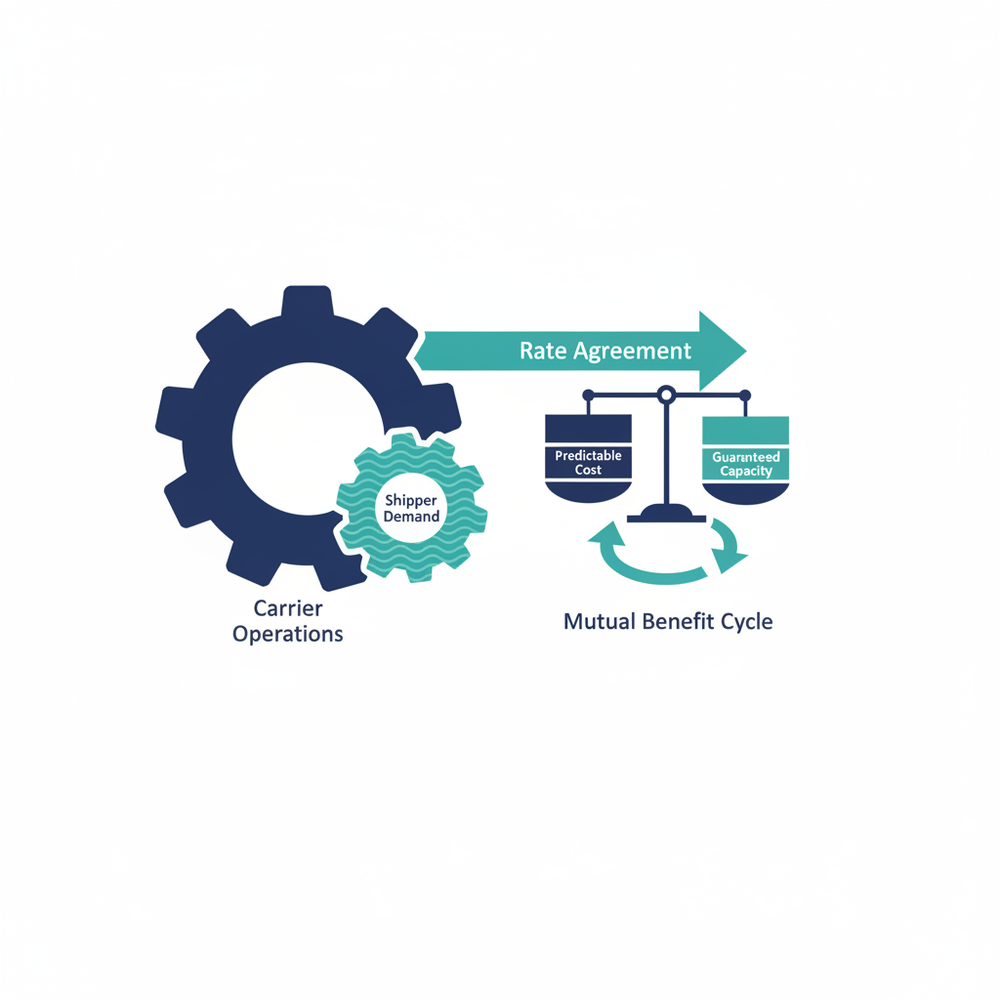
Here are concrete scenarios with numbers. Each one traces a billing problem back to a specific rate agreement gap.
Scenario 1: Detention without a clock-start definition
Setup: Carrier arrives at 7:45 AM for an 8:00 AM appointment. Shipper doesn't load until 12:15 PM. Carrier bills detention starting from 7:45 AM arrival, 4.5 hours at $100/hour = $450. Rate agreement has no detention clause.
With a proper rate agreement: Detention clock starts at 8:00 AM (appointment time), 2 hours free time, $75/hour after free time, $300 daily cap. Billable detention: 12:15 PM minus 10:00 AM (after free time) = 2.25 hours × $75 = $168.75.
Cost of the gap: $281.25 per load. On a lane you run 15 times per month with frequent shipper delays, that's $4,218.75 per month.
Scenario 2: Fuel surcharge index substitution
Setup: Rate con specifies FSC pegged to DOE weekly national average. Carrier invoices using their private tariff FSC schedule, which is 8 cents per mile higher. Load is 750 miles.
Calculation: 750 miles × $0.08/mile difference = $60 per load. Broker runs 40 loads per month on this carrier. Monthly overbill: $2,400. Over a 12-month contract period: $28,800. All because the rate con didn't specify the exact index, region, and effective date for the FSC.
Scenario 3: Lumper fee with no cap
Setup: Rate agreement says "lumper reimbursement with receipt." Carrier submits a $600 lumper receipt. Market standard for this delivery facility is $175 to $225.
With a cap clause: "Lumper fees reimbursable up to $250 with receipt. Amounts over $250 require pre-approval." Without pre-approval, the broker pays $250 instead of $600. Savings: $350 per occurrence. If this happens on 5% of loads (25 out of 500 per month), that's $8,750 per month in avoided overpayment.
Scenario 4: Layover and detention double-billed on the same load
Setup: Driver is detained 6 hours, then told to return the next morning. Carrier bills $300 detention + $250 layover = $550 total. Rate agreement doesn't define the relationship between detention and layover.
With proper language: "Detention exceeding 8 hours converts to a layover at $250 flat. Detention and layover may not be billed for the same event at the same facility." The correct charge is $250 (layover only, since detention converted). Savings: $300.
The aggregate math
Based on Laneproof analysis of 127,000 carrier invoices, the average overbill rate on loads with incomplete rate agreements is 3.8 percent of the total invoice amount. For a broker running 500 loads per month at an average linehaul rate of $1,800, that's: 500 loads × $1,800 × 0.038 = $34,200 per month in billing discrepancies. Not all of that is recoverable. But a rate agreement with complete detention, FSC, accessorial, and TONU language typically cuts overbilling by 60 to 70 percent, based on Laneproof analysis of before-and-after billing data across 34 brokerage accounts.
Frequently Asked Questions About Freight Rate Agreements
What is the purpose of a rate agreement in freight?
A rate agreement in freight sets the linehaul rate, fuel surcharge terms, accessorial charges, and payment conditions between a broker (or shipper) and a carrier. Its purpose is to eliminate billing ambiguity before the load moves. According to ContractsCounsel, a rate agreement is a contract that fixes the monetary rate between a company and a vendor. In trucking, this means every billable event, from detention to lumper fees, should have a defined rate and condition in the agreement.
What is the difference between a rate agreement and a rate confirmation?
A rate agreement is the master contract governing the ongoing relationship between a broker and carrier. It sets default rules for payment, accessorials, and dispute resolution. A rate confirmation (rate con) is the per-load document that specifies the linehaul rate, pickup/delivery details, and any load-specific terms. When the rate con conflicts with the master agreement, the rate con typically governs for that load. When the rate con is silent on a charge, the master agreement fills in the gap. If both are silent, the carrier's tariff may apply by default.
How do I dispute a carrier invoice that doesn't match the rate agreement?
Pull the rate con and master agreement. Match every line item on the invoice against the agreed terms. Calculate the exact dollar discrepancy for each mismatched line. Email the carrier's billing contact (not dispatch) with the invoice number, rate con, your calculations, and a clear statement of the amount you're approving versus disputing. Pay the undisputed amount on time. Track the outcome and log patterns by carrier and charge type.
What should a freight rate agreement include to prevent overbilling?
At minimum: linehaul rate, mileage basis, fuel surcharge index and formula, a complete accessorial schedule with per-unit rates and caps, detention clock-start definition and free time window, lumper fee caps and pre-approval rules, TONU and layover flat rates and triggers, and payment/dispute terms with specific timeframes. Any field left blank is a field the carrier fills in with their own number.
Are rate agreements legally enforceable in freight disputes?
Yes. Per JDSupra's overview of trucking rate and payment rules, the contractual terms between parties govern payment obligations. A signed rate agreement (or a rate confirmation accepted by the carrier, even electronically) is an enforceable contract. The challenge is enforcement: without specific, defined terms, there's nothing concrete to enforce. Vague language like "accessorials as applicable" gives you almost no legal standing in a dispute.
Sources
- Forecasting Freight Transportation Rates with MIT's Chris Caplice — DOT Volpe Center
- How stable are contract rates? — FreightWaves
- How Can I Oppose the FMCSA's Rate Transparency NPRM? — Transportation Intermediaries Association (TIA)
- Trucking Industry Trendlines — DAT
- What is a Rate Agreement? — ContractsCounsel
- Trucking Rate, Payment, and Collection Rules of the Road — JDSupra
- Freight Rate Agreements: The Comprehensive Guide — ShipTLI
- A guide to freight trucking rates in 2025 — Uber Freight
Stop Paying for Gaps in Your Rate Agreements
Every blank field in a rate agreement is a line item a carrier can fill in with their own number. The fix isn't complicated: define detention clocks and caps, specify your FSC index and formula, list every approved accessorial with a dollar amount, and include TONU and layover triggers. Then match every carrier invoice against those terms, line by line, before you pay.
If your team processes more than 50 carrier invoices a week, doing that matching manually takes hours you don't have. Automated document extraction tools can pull rate con and invoice data into a single comparison, flagging discrepancies before they hit your AP. That's where the $34,200 per month in overbilling starts coming back to your bottom line instead of leaving it.
Full guide: Rate Confirmation: What Brokers Get Wrong and What It Costs
Related: How to Extract Data from Rate Confirmations Without Losing Money
Related: Rate Confirmation Automation Software: What It Has to Handle to Be Worth It
Related: Rate Confirmation Generator: The Fields Most Brokers Miss