Invoice Matching for Freight: Where Carrier Bills Go Wrong
Researched and written with AI assistance. Reviewed by the Laneproof team.
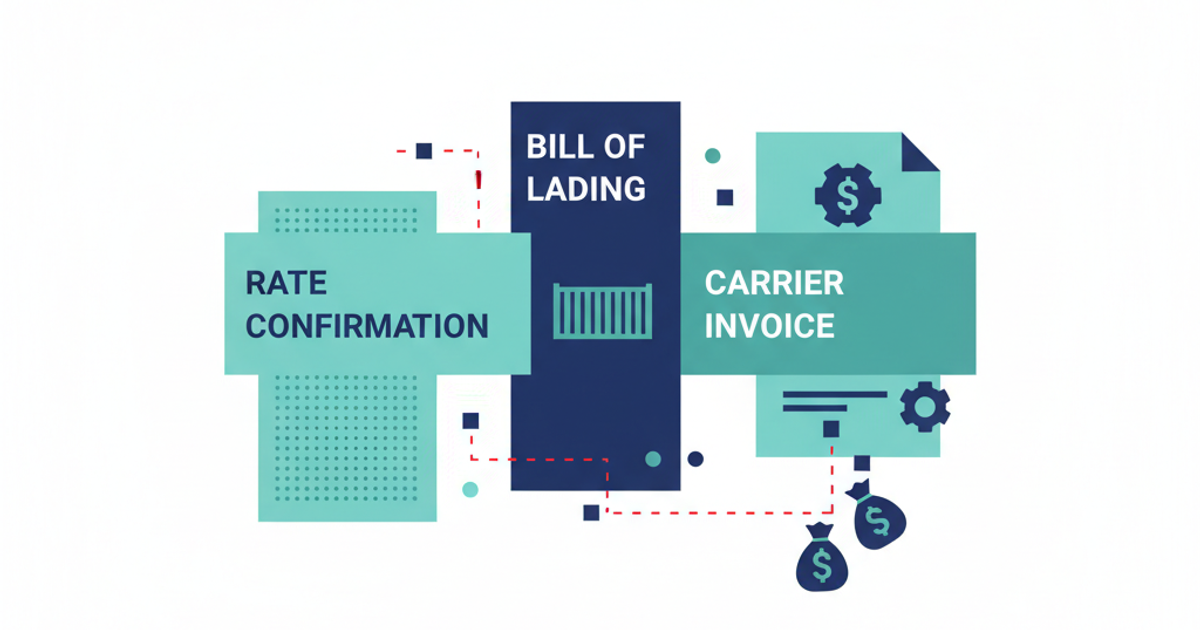
Invoice matching in freight means comparing three documents (the rate confirmation, the bill of lading, and the carrier invoice) to make sure the amount you're paying matches what you agreed to and what actually happened on the load. That sounds simple enough. But according to GoComet's freight invoice data, up to 60% of freight invoices do not match the final quotation. For a broker running 300 loads per month at an average invoice of $1,850, even a 3.8% overbill rate means roughly $21,090 walking out the door every month. Not because the math is complicated, but because nobody had time to check the rate con against the invoice before the payment batch went out.
This article breaks down exactly where invoice matching goes wrong in freight, which mismatches cost the most, and how to build an audit process that catches discrepancies before they become margin losses.
What Invoice Matching Actually Means in Freight (Not Just AP)
Most content about invoice matching treats it as a procurement exercise: match the purchase order to the goods receipt to the vendor invoice. That's standard accounts-payable 3-way matching, and Coupa's overview of invoice matching types covers it well for general business contexts. But freight is a different animal.
In freight, there is no purchase order in the traditional sense. The rate confirmation (rate con) is your agreement. The bill of lading (BOL) is your proof of what shipped and what happened at pickup and delivery. The carrier invoice is the bill. These three documents serve different functions and are generated by different parties at different times, which is exactly why they so often disagree.
Why Generic AP Matching Falls Short
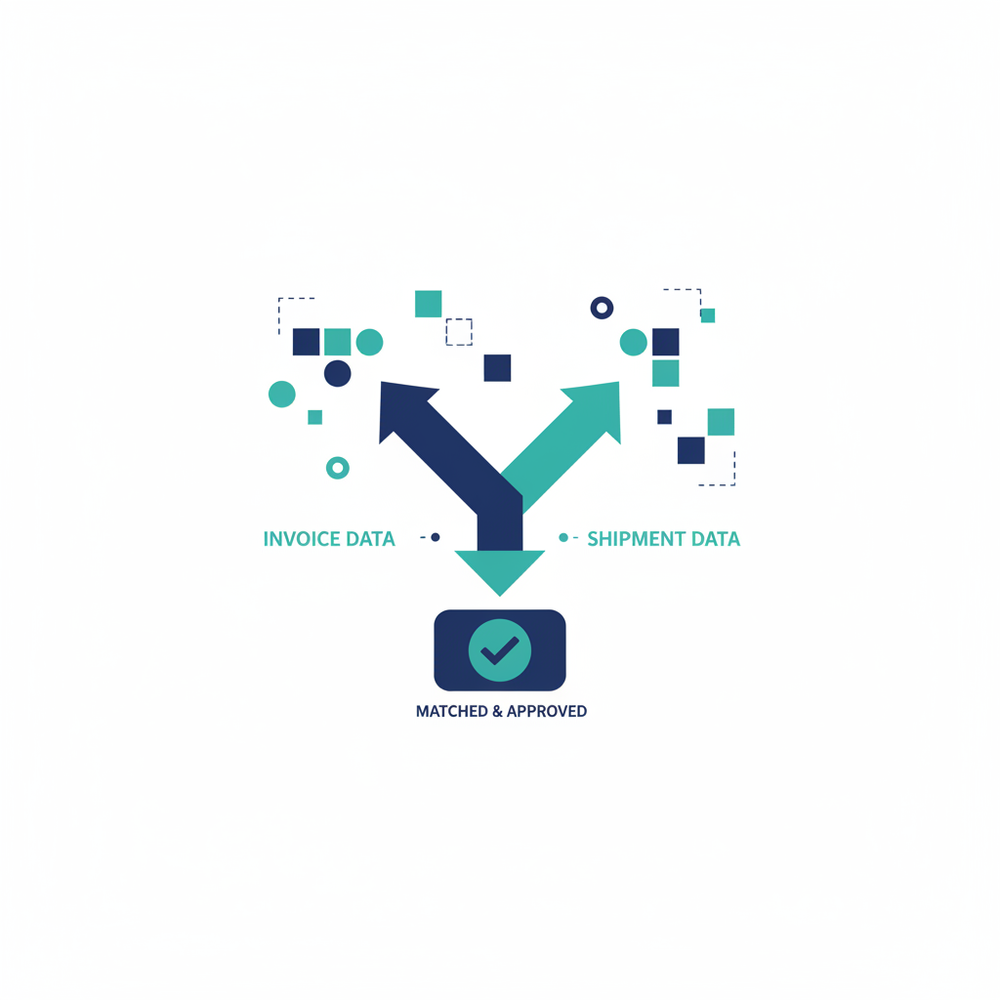
Generic AP matching assumes a clean data trail: PO number, receiving dock stamp, vendor invoice. Freight throws a wrench into that assumption. Your rate con might lock in a fuel surcharge percentage based on a DOE index from a specific week. The BOL might show timestamps that contradict detention claims. The carrier invoice might include accessorial charges that were never discussed, let alone agreed to. As RateLinx CEO explains in their analysis of shipment-to-invoice matching challenges, the biggest difficulty is that shipment data and invoice data live in different systems and rarely share a common identifier.
For freight brokers, invoice matching is not a finance department chore. It is an operational discipline that directly protects your margin on every single load. If your team is still treating it like a monthly accounting task instead of a per-load quality check, the common billing mistakes draining your margins are adding up faster than you think.
The Three Documents You're Matching — and Why All Three Have to Agree
Every freight invoice audit comes down to three documents. Each one tells a different part of the story, and each one is owned or influenced by a different party. Here's what each document proves and where it typically introduces errors.
Document 1: The Rate Confirmation
The rate con is your contract. It states the agreed linehaul rate, any pre-approved accessorials, the fuel surcharge calculation method, and the service terms. This is what the carrier agreed to haul the load for. Any charge on the invoice that isn't on the rate con needs justification, and many won't survive scrutiny.
Common problems with rate cons: the fuel surcharge percentage was based on a DOE index from a specific date, but the carrier's invoice uses a different week's rate. Or the rate con caps detention at 2 hours free time, but the invoice bills from minute one. Or the rate con says nothing about lumper fees, but the carrier invoices one anyway.
Document 2: The Bill of Lading (BOL)
The BOL is your proof of what happened. It records pickup and delivery dates, commodity details, weight, and often includes timestamps that can verify or disprove detention and layover claims. It also may include cash receipts for lumper services paid at the dock.
The BOL is the document most often overlooked during invoice matching because it requires someone to actually read the scanned paperwork, not just compare numbers in a TMS. But the BOL is where you catch the detention hours that don't add up, the lumper fee that was less than what the carrier billed, and the delivery date that disproves a layover claim.
Document 3: The Carrier Invoice
The carrier invoice is the bill. It should reflect the rate con terms applied to the actual service documented on the BOL. In practice, it often reflects neither. Carrier invoices frequently include charges that weren't on the rate con, detention hours that exceed what the BOL supports, fuel surcharges calculated from the wrong index date, and accessorials that were never agreed to in the carrier packet.
According to Trax's analysis of smart invoice matching for freight cost control, implementing systematic invoice matching can improve cost allocation accuracy by 40 to 50% and reduce financial risk by 35%. Those numbers come from catching exactly the kind of mismatches described above.
The rate con is the agreement. The BOL is the evidence. The carrier invoice is the claim. When all three agree, you pay. When they don't, you audit.
Where the Money Leaks: The Most Expensive Freight Invoice Mismatches
Not all invoice mismatches are created equal. Some are $10 rounding errors. Others are $200+ per load, multiplied across hundreds of loads per month. Here are the mismatches that cost freight brokers the most, ranked by how often we see them and how much they hurt.
Detention Overbilling
Detention is the single most disputed accessorial in freight billing. Carriers bill for time spent waiting at shipper or receiver facilities, and the incentive to round up is obvious. The problem is that many brokers pay detention invoices without checking the timestamps against the BOL.
Example: A carrier invoices 4 hours of detention at $75/hour ($300 total) on a load where the BOL shows a lumper start time and a driver out-gate timestamp that proves only 1.5 hours elapsed. That's an overbill of $187.50 on a single load. Multiply that across 20 loads a month with inflated detention and you're looking at $3,750 in margin loss, just from one accessorial category. If detention disputes are a recurring issue on your book, the step-by-step approach to winning detention charge disputes covers the documentation you need.
Fuel Surcharge Miscalculations
Fuel surcharges should be straightforward: the rate con specifies a percentage or a per-mile rate, typically pegged to the DOE national average diesel price for a given week. But carriers sometimes use the wrong index week, apply a higher percentage than the rate con states, or calculate the surcharge on a different base rate than the linehaul.
Example: A fuel surcharge billed at 28% when the rate con locked in 24% based on the DOE index from the load date. On a $2,200 linehaul, that's $616 billed versus $528 owed, an $88 overcharge. You only catch this by checking the rate con date against the correct index week. Most brokers don't.
Lumper Fee Inflation
Lumper fees are paid at the dock and reimbursed to the carrier. The carrier sends an invoice for the lumper amount. The problem: the invoice amount doesn't always match the cash receipt attached to the BOL.
Example: A lumper fee invoiced at $400, but the BOL cash receipt shows $310 paid at the door. That's a $90 discrepancy on a single load. Across 12 similar loads in a single month, that's $1,080 in overpayments that would never surface without BOL verification.
Ghost Accessorials: TONU, Dry Runs, and Layovers
TONU (truck ordered, not used) charges, dry run fees, and layover charges are legitimate when the service conditions warrant them. They become a problem when they're billed without supporting evidence or billed twice.
Example: A TONU charged at $250 on a load where the carrier's own check call log shows the truck was never dispatched. The full $250 is recoverable if the dispatcher flags it within the dispute window. In another case, a dry run fee was billed twice: once on the original carrier invoice and again as a line item on a corrected invoice submitted after a dispute. This double-billing was caught only by comparing invoice numbers and dates against the original rate con.
Accessorial Rate Overages
Even when an accessorial charge is legitimate, the rate might not be. Carrier packets and contracts often cap specific accessorials at agreed amounts. When the invoice exceeds those caps, the overage is yours to catch.
Example: A layover billed at $350 when the contract cap is $275. That's a $75 overage that required pulling the carrier packet to prove the agreed rate. These are small per-load, but persistent across a carrier relationship.
According to Hyland's analysis of freight billing processes, the liner shipping industry alone is exposed to $34.4 billion in invoice and payment processing inefficiencies. That figure reflects a systemic problem, not isolated incidents. Even small brokerages absorb a proportional share of this waste.
Spot vs. Contract Freight: Why Matching Breaks Down Differently in Each
The type of freight you're running changes where invoice matching breaks down. Spot and contract loads have different risk profiles for billing errors, and treating them the same way in your audit process means you'll miss the mismatches that matter most in each category.
Spot Freight: Rate Con Volatility
On spot loads, the rate con is negotiated per load. Fuel surcharges, accessorial allowances, and detention terms may vary from one rate con to the next, even with the same carrier. The risk here is that your billing team applies a standard rule (e.g., "fuel surcharge is always 22%") when the actual rate con for that specific load states something different.
Spot loads also carry a higher risk of TONU charges and dry run fees because the carrier relationship is transactional. There's less hesitation to bill aggressively when there's no long-term partnership to protect.
The biggest matching challenge on spot freight is volume. If you're running 300 spot loads per month and each has a unique rate con, that's 300 individual agreements your team has to check against 300 invoices. Without a system that pulls the rate con data automatically, this is where the hours disappear. The full breakdown of the freight invoice reconciliation process walks through how to structure this workflow load-by-load.
Contract Freight: Slow Drift and Assumption Risk
Contract loads are supposed to be simpler because the rates are locked in for a period. But contract freight introduces a different type of matching risk: slow drift. A carrier starts billing a slightly higher fuel surcharge, or adds an accessorial that wasn't in the original contract but became "standard" over time. Because the invoices look familiar month after month, nobody catches the drift until it's been compounding for quarters.
Contract loads also carry assumption risk. Your billing coordinator assumes the contract terms haven't changed and stops checking individual rate cons against invoices. Meanwhile, a rate adjustment took effect, an accessorial cap changed, or a fuel surcharge formula was updated. The invoice matches the new terms, but nobody on your side updated the baseline.
Whether spot or contract, the discipline is the same: every invoice gets checked against its specific rate con and the supporting BOL documentation. The difference is what you're looking for.
How to Run a Carrier Invoice Audit Without Losing Half Your Day
Most freight brokers know they should be auditing carrier invoices. The reason they don't (or do it inconsistently) is time. Pulling up the rate con, finding the BOL, cross-referencing timestamps, checking the DOE index for the correct week, and then doing that 300 times a month is not realistic with manual processes. Here's how to make it workable.
Step 1: Prioritize by Risk, Not by Order Received
Not every invoice needs the same level of scrutiny. Start with loads that carry the highest mismatch risk:
- Invoices with any accessorial line item (detention, lumper, layover, TONU, dry run)
- Spot loads with carriers you've used fewer than five times
- Invoices where the total exceeds the rate con amount by any margin
- Loads that involved appointment reschedules or delivery exceptions
This risk-based approach lets you audit the 20% of invoices that contain 80% of the billing errors, instead of treating every invoice equally.
Step 2: Match in the Right Order
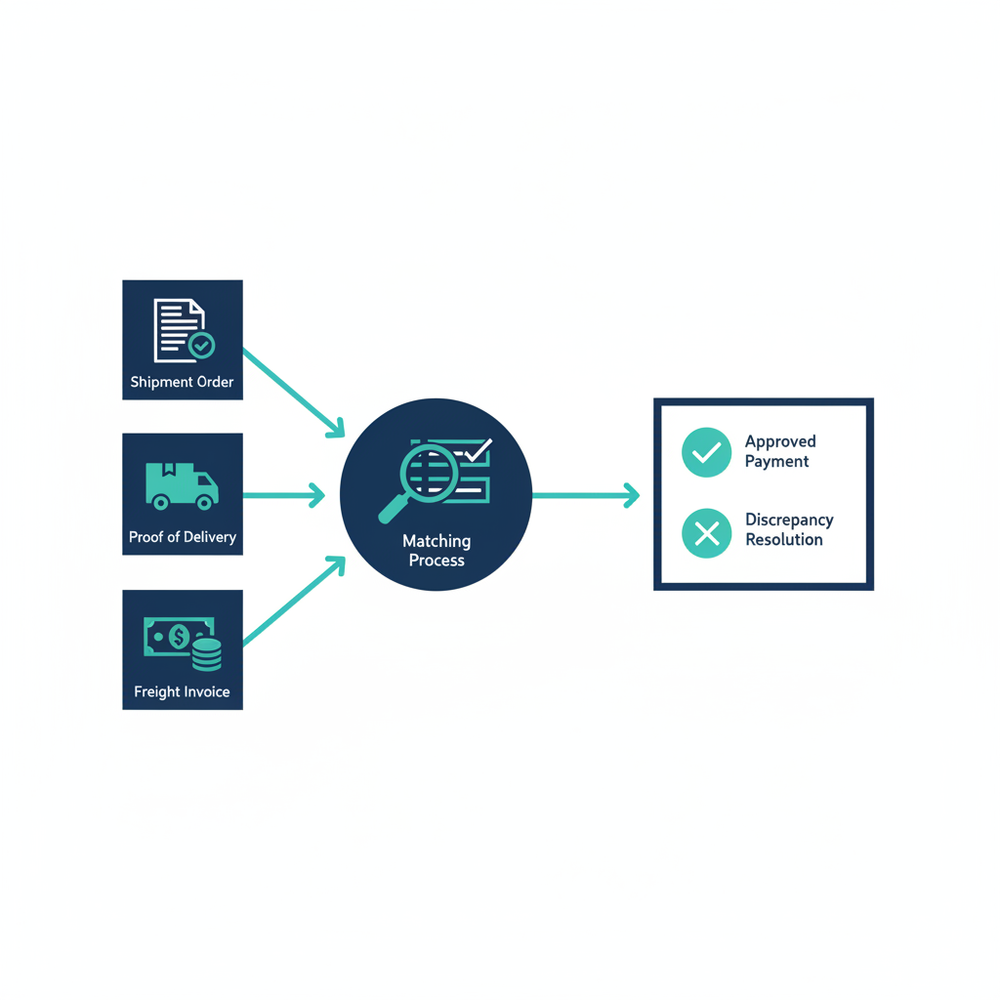
The matching sequence matters. Start with the rate con (what you agreed to), then check the BOL (what actually happened), then compare both to the carrier invoice (what you're being billed).
- Rate con first: Confirm the linehaul rate, fuel surcharge terms, and any pre-approved accessorials.
- BOL second: Verify pickup/delivery dates, timestamps, weight, lumper receipts, and any exception notes.
- Carrier invoice third: Compare every line item against the rate con terms, validated by the BOL evidence.
According to FreightMynd's analysis of 3-way invoice matching for freight, production AI systems can now achieve 92 to 97% straight-through matching rates on freight invoices. That means only 3 to 8% of invoices require manual review when the matching is automated, a massive time reduction compared to checking every invoice by hand.
Step 3: Build a Dispute Template
When you find a mismatch, speed matters. Carrier dispute windows are real, and the longer you wait to flag an issue, the less likely you are to recover the overpayment. Build a standard dispute template that includes:
- Load number and carrier invoice number
- The specific line item in dispute
- The rate con clause or amount that applies
- The BOL evidence supporting your position (timestamps, receipts, signatures)
- The dollar amount of the discrepancy
Having this template ready turns a 15-minute email into a 3-minute filing. Over the course of a month, that time savings alone justifies the process. For a deeper look at structuring disputes and preventing overbills, the guide on stopping carrier overbills through invoice reconciliation covers the full workflow.
Step 4: Track Patterns, Not Just Individual Errors
A single detention overbill is a mistake. The same carrier overbilling detention on 40% of their loads is a pattern. Once you're auditing consistently, track which carriers generate the most disputes, which accessorial categories have the highest error rates, and which lanes produce the most mismatches. This data doesn't just save you money on past invoices. It informs your carrier selection and rate negotiation on future loads.
According to Trax's smart invoice matching framework, systematic matching reduces financial risk by 35%, not just because individual invoices get caught, but because the data creates accountability across the entire carrier relationship.
Frequently Asked Questions About Invoice Matching in Freight
What is a matching invoice?
A matching invoice is one where the billed amount aligns with the agreed terms and the supporting documentation. In freight, this means the carrier invoice matches the rate con (the agreement) and is supported by the BOL (the proof of what happened). When all three documents agree on rate, service, and charges, the invoice is considered matched and ready for payment.
What is the 3-way invoice matching process in freight?
In freight, 3-way invoice matching compares the rate confirmation, the bill of lading, and the carrier invoice. The rate con establishes the agreed price and terms. The BOL provides evidence of the actual service (dates, times, weights, receipts). The carrier invoice is the payment request. A successful 3-way match means all three documents agree on linehaul rate, fuel surcharge, accessorials, and service details. Any variance between the three triggers a review or dispute.
What is another word for invoice matching?
In the freight industry, invoice matching is often called invoice reconciliation, carrier invoice audit, or freight billing reconciliation. Some operations teams refer to it as rate con matching or simply "checking the bills." The terminology varies, but the process is the same: comparing what was agreed to, what happened, and what's being billed before approving payment.
What are the different types of invoice matching?
The standard types are 2-way matching (invoice vs. rate con only), 3-way matching (invoice vs. rate con vs. BOL), and 4-way matching (which adds the carrier packet or contract terms as a fourth check). According to ZDS's freight audit best practices, 4-way matching is recommended for brokers with contract carriers because it catches accessorial rate overages that 3-way matching can miss. For spot freight, 3-way matching is typically sufficient since the rate con contains the full agreement.
How long does freight invoice matching take per load?
Manual invoice matching takes 5 to 15 minutes per load, depending on the number of accessorials and the quality of the scanned documents. For a broker handling 300 loads per month, that's 25 to 75 hours of staff time, or roughly one full-time employee's workload. Automated matching tools can reduce the manual review to only the 3 to 8% of invoices that fail the automated check, according to FreightMynd's straight-through matching benchmarks.
Stop Paying Before You Match
Every freight broker pays carriers. Not every freight broker checks the math first. The difference between the two is roughly 3 to 4% of your total freight spend, money that disappears into detention overcharges, fuel surcharge miscalculations, inflated lumper fees, and accessorials that were never agreed to.
The fix isn't complicated. Match the rate con to the BOL to the carrier invoice on every load, or at minimum on every load that carries accessorial risk. Prioritize by risk. Track patterns by carrier. Dispute fast with documentation.
If your team is processing more than 50 invoices a week and still matching manually, tools that automatically flag invoice-to-rate-con discrepancies can cut audit time to the exceptions that actually need a human eye. The math on that payback is fast: catching even half of a 3.8% overbill rate on 300 loads pays for itself many times over.
Sources
- Smart Invoice Matching for Precise Freight Cost Control — Trax Technologies
- Freight Payment: Freight Invoice Facts You Should Know — GoComet
- What's the Biggest Challenge Matching Shipments to Invoices? — RateLinx
- 3-Way Invoice Matching for Freight — FreightMynd
- The Fragile State of Freight Billing Processes and Audits — Hyland
- 8 Best Practices for Freight Audit & Payment — ZDS
- What Is Invoice Matching? Key Types & Processes Explained — Coupa
Related: Invoice Reconciliation Job Description for Freight Brokerages