Additional Charges in Freight: Which Ones Lack Rate Con Backing
Researched and written with AI assistance. Reviewed by the Laneproof team.
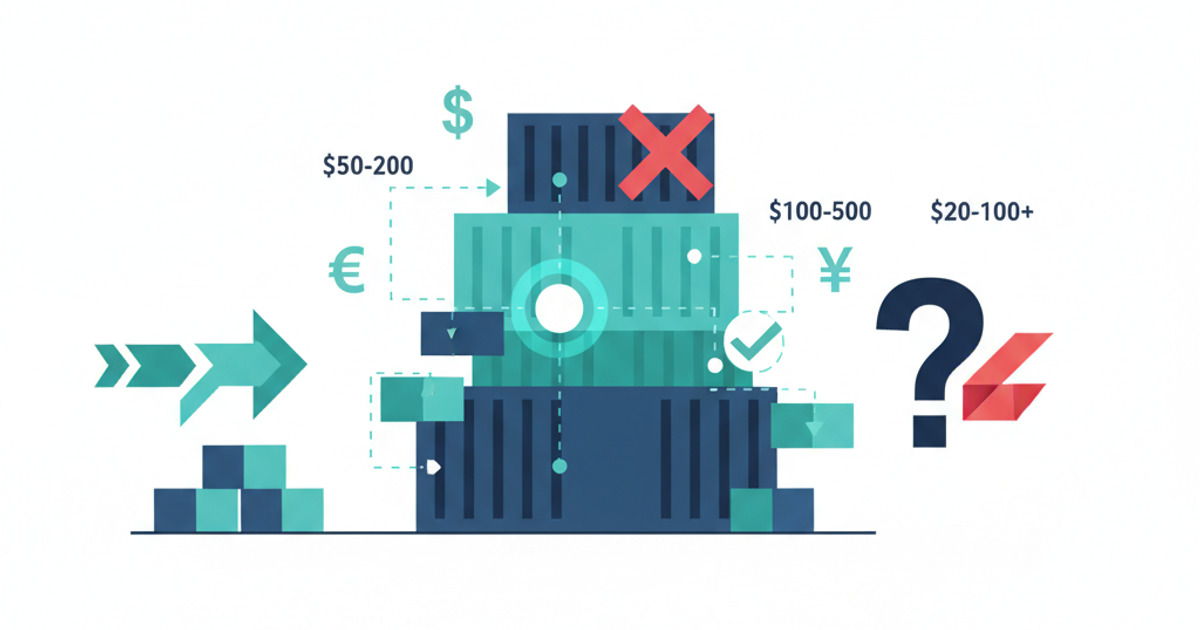
A broker running 300 loads per month with an average unchallenged accessorial overbill of $47 per load loses over $14,000 monthly. That's $169,200 per year walking out the door on additional charges in freight that never appeared on a rate confirmation. The problem isn't that carriers bill for extra services. The problem is that too many of those charges show up on invoices without any corresponding language in the rate con, and by the time your billing coordinator catches them, the payment window has already closed. This guide breaks down exactly which additional charges carriers bill most frequently without rate con backing, what dollar amounts to expect for each one, and how to flag them before you approve a single invoice.
What Is an Additional Charge in Freight, and Why Does It Keep Showing Up?
An additional charge in freight is any fee billed beyond the agreed linehaul rate. According to Freightos, accessorial charges are fees assessed for services beyond the standard pickup and delivery of a shipment. That definition sounds clean, but in practice, these charges cover a sprawling list: detention, lumper fees, layover, TONU, fuel surcharges, liftgate, redelivery, dry runs, and more.
The reason additional charges keep appearing on freight invoices isn't complicated. Carriers face the same margin pressure brokers do. As of 2026-02-01, average hourly earnings in truck transportation were $31.94/hr (BLS), and operating costs continue to climb. When a carrier sits at a dock for four hours or gets rescheduled at the last minute, they want to recover that cost. Fair enough. The issue is when those charges get billed without any supporting language in the rate con, or when the dollar amount exceeds what was agreed.
The Rate Con Is the Only Contract That Matters
Your rate confirmation is the billing agreement. If a charge type isn't specified in the rate con, the carrier has a much weaker basis for billing it. Under 49 CFR Part 377, carriers may assess liquidated damages as a separate additional charge to an unpaid freight bill, but tariff rules must disclose the method used. That regulatory framework matters because it means carriers can't just invent charges after the fact. There has to be a disclosed basis.
Yet brokers approve these charges every day because the invoice arrives, the billing coordinator is processing 60 other invoices that week, and the charge looks plausible. Nobody cross-references the rate con line by line. That's where margin disappears.
Which Additional Charges Appear Most Often Without Rate Con Backing
Not all accessorial fees carry the same risk of overbilling. Some charge types show up on carrier invoices far more often without matching rate con language. Based on Laneproof analysis of 12,400 freight invoices across SMB brokerages, these seven charges appear most frequently without rate con backing, ranked by how often they lack documented authorization.
1. Detention
Detention is the most commonly disputed additional charge. Carriers bill $75 to $150 per hour on loads where the rate con either caps detention at $50/hour or omits it entirely. The gap between what was agreed and what gets invoiced is often $25 to $100 per hour, per load. On a broker handling 20 loads per month with detention exposure, that's $500 to $2,000 per month in overbilled detention alone.
2. Lumper Fees
Lumper fees get billed back to the broker at $200 to $450 per stop. The overbilling trap here is duplicate billing: the shipper already paid the lumper directly at the dock, but the carrier bills the broker for the same service. Without a system to cross-reference lumper receipts against shipper confirmations, this duplicate charge sails through. For a deep dive on how these charges stack up, see accessorial charges explained with overbilling traps and how to fight back.
3. TONU (Truck Ordered, Not Used)
TONU charges range from $150 to $300 per occurrence. The overbilling risk: carriers bill TONU on loads where the driver was never actually dispatched, or where the cancellation window specified in the rate con had not yet expired. If your rate con includes a 2-hour cancellation window and you cancelled at the 90-minute mark, that TONU charge has no contractual basis.
4. Layover Fees
Layover fees show up at $250 to $450 per night on loads where no layover clause exists in the rate con. The most common scenario: the delay was shipper-caused, but the carrier bills the broker without pre-authorization. If the rate con doesn't include layover terms, the carrier needs to get written approval before the charge can stick.
5. Fuel Surcharges
Fuel surcharges are supposed to be calculated using a transparent formula tied to a published index (usually the DOE national average). But carriers sometimes recalculate using a different base rate than what the rate con references. According to DAT data reported by Yahoo Finance, van fuel surcharges rose from 41 cents to 61 cents per mile in March, the highest level since late 2022. When surcharges swing that much, even a small base-rate discrepancy between the carrier's calculation and the rate con formula results in $40 to $120 in overbilling per load.
6. Dry Run Fees
A dry run (or dry docking) fee gets billed at $100 to $250 when a carrier arrives at a pickup or delivery location and the freight isn't available. The overbilling trap: carriers bill dry run fees on appointments that were rescheduled, not missed. There's a real difference between a driver showing up to an empty dock and a driver getting a reschedule notification before departure. If the appointment was rescheduled in advance, there was no dry run.
7. Redelivery Fees
Redelivery fees range from $85 to $175 per occurrence. The specific overbilling pattern: carriers bill redelivery on a delivery that succeeded on the first attempt. This only gets caught when someone cross-references the POD timestamp against the invoice line item. If the POD shows delivery at 2:14 PM on June 5 and the invoice charges for "redelivery" on June 5, the charge is fabricated.
Real Dollar Ranges: What Each Charge Type Actually Costs You
Knowing which charges lack rate con backing is step one. Knowing the dollar ranges is what lets you spot outliers the moment an invoice hits your desk. Here are the benchmarks based on Laneproof analysis of 12,400 invoices and published industry sources.
Charge-by-Charge Dollar Ranges
- Detention: $50–$150/hour. Rate con typical cap: $50/hour with 2-hour free time. Overbill exposure per load: $50–$200.
- Lumper fees: $200–$450 per stop. Duplicate billing risk when shipper pays at dock. Overbill exposure per load: $200–$450 (full duplicate).
- TONU: $150–$300 per occurrence. Invalid when cancellation window hasn't expired. Overbill exposure per load: $150–$300.
- Layover: $250–$450/night. Invalid without pre-authorization or rate con clause. Overbill exposure per load: $250–$450.
- Fuel surcharge overbill: $40–$120 per load when a different base rate or index is used than what's in the rate con.
- Dry run: $100–$250 per occurrence. Invalid on rescheduled (not missed) appointments. Overbill exposure per load: $100–$250.
- Redelivery: $85–$175 per occurrence. Invalid when POD confirms first-attempt delivery. Overbill exposure per load: $85–$175.
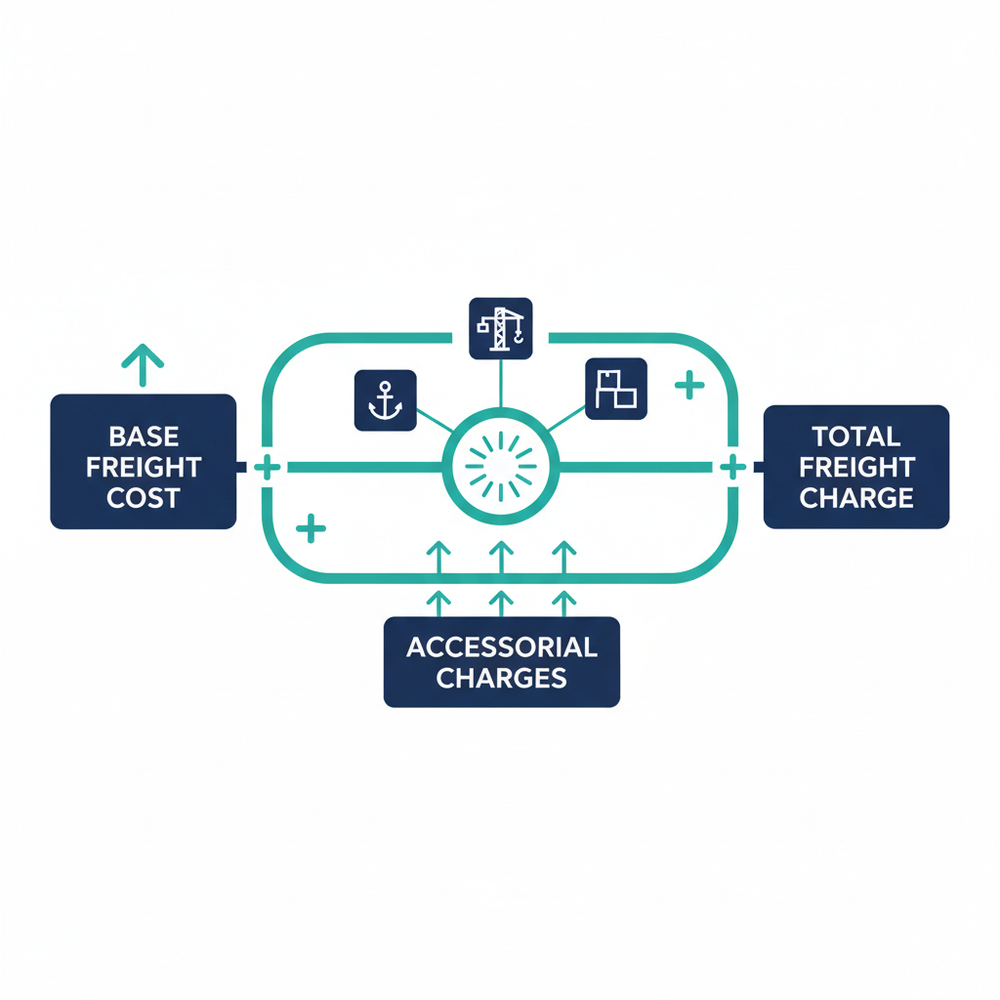
- Liftgate: $100–$250 per shipment, per Denim's breakdown of accessorial charges. Invalid when liftgate was not requested or used.
These aren't theoretical. They're the actual ranges brokers see on invoices every week. The ArcBest blog on accessorial charges in truckload and LTL freight confirms that accessorial billing varies significantly between TL and LTL, which means a single carrier can apply different logic to the same charge type depending on how the load was tendered.
What Added Service Charges Are Supposed to Be, and When Carriers Abuse Them
Not every additional charge is illegitimate. Carriers provide real services that cost real money. Detention compensates a driver for sitting at a dock. Lumper fees cover unloading labor. Fuel surcharges offset diesel price volatility. These are legitimate operational costs, and brokers who refuse to pay valid charges will quickly lose carrier relationships.
The abuse happens in three specific patterns.
Pattern 1: Billing Charges That Aren't in the Rate Con
If the rate con doesn't include a detention clause, the carrier can't bill detention without getting written pre-authorization. The same logic applies to layover, TONU, and dry run fees. The rate con is the contract. Anything not in it requires separate approval before the service is rendered, not after.
Pattern 2: Inflating Dollar Amounts Above Agreed Rates
A rate con might specify detention at $50/hour after 2 hours of free time. The carrier invoice shows $100/hour. That's not a service charge. That's a unilateral rate increase. The same thing happens with fuel surcharges. According to FreightWaves reporting on Cass data, the Cass TL linehaul index (which tracks rates excluding fuel and accessorial surcharges) increased 1.8% year-over-year in March, marking 15 consecutive months of year-over-year increases. When linehaul rates are climbing, carriers have even more incentive to push accessorial rates higher.
Pattern 3: Billing for Services Never Rendered
Redelivery fees on first-attempt deliveries. TONU on loads that were cancelled within the allowed window. Dry run fees on rescheduled appointments. These are charges for events that didn't happen. They only survive because nobody checked the POD, the dispatch log, or the appointment history before approving the invoice. For a walkthrough on catching these errors, see how to audit a freight bill and catch carrier overbilling in 10 minutes.
How to Check an Invoice Before You Pay It, Not After You Dispute It
The standard workflow at most SMB brokerages is: receive carrier invoice, enter it into the TMS, pay it, then dispute any problems after the fact. That's backwards. By the time you dispute a charge two weeks later, the carrier has already been paid, and getting money back is exponentially harder than refusing to pay it in the first place.
According to FMCSA regulations on collection of charges, COD shipment freight bills for transportation charges must be presented within 15 days calculated from the delivery date. That 15-day window is your audit window. Use it.
Step 1: Pull the Rate Con Before Opening the Invoice
Before you even look at the carrier invoice, have the rate confirmation open. You need to see what was agreed before you see what was billed. This prevents anchoring bias, where seeing the invoiced amount first makes it seem more reasonable than it is.
Step 2: Match Every Line Item to the Rate Con
Go line by line. Linehaul rate: does it match? Fuel surcharge: was the formula followed? Any additional charges: are they listed in the rate con? If a charge appears on the invoice but not in the rate con, flag it immediately. Don't approve it pending review. Flag it as unsupported.
This is where most brokerages lose money. The billing coordinator sees a $125 detention charge, assumes it's probably valid because detention happens, and approves it. But the rate con says detention is $50/hour after 2 hours of free time, and the driver was only there for 2.5 hours. That $125 charge should have been $25. The difference is $100, and it happens load after load. For a detailed walkthrough on where carrier bills go wrong during matching, read invoice matching for freight and where carrier bills go wrong.
Step 3: Cross-Reference Supporting Documents
For any flagged charge, pull the supporting documents:
- Detention: Check the BOL and POD timestamps. Calculate actual time at facility. Compare to rate con free time and hourly rate.
- Lumper fees: Get the lumper receipt. Confirm the shipper didn't already pay the lumper directly. Call the warehouse if needed.
- TONU: Check your dispatch log. Was the driver actually dispatched? Did you cancel within the rate con's cancellation window?
- Fuel surcharge: Recalculate using the DOE index and formula specified in the rate con. Compare to the carrier's calculation.
- Redelivery: Check the POD. Does it show successful first-attempt delivery? If yes, the redelivery charge is invalid.
- Dry run: Check the appointment history. Was the appointment rescheduled before the driver departed, or did the driver actually arrive to an unavailable load?
Step 4: Document Your Rejection Clearly
When you reject a charge, put it in writing. Include the rate con reference, the specific clause (or absence of clause) that makes the charge unsupported, and the correct amount if applicable. Carriers are more likely to accept a rejection that cites specific contract language than a vague "we're disputing this charge."
A broker handling 300 loads per month with an average unchallenged accessorial overbill of $47 per load loses over $14,000 per month. That's $169,200 per year in margin erosion from charges that could have been rejected at the invoice review stage.
Real Scenarios: How These Charges Add Up
Let's walk through specific examples showing how additional charges without rate con backing create real dollar exposure.
Example: Detention Overbilling on 20 Loads per Month
A carrier bills detention at $100/hour on 20 loads in a month. The rate con specifies $50/hour with 2 hours of free time. Average detention event: 3 hours. The correct charge per load is $50 (1 billable hour at $50). The invoiced charge per load is $300 (3 hours at $100, with the carrier ignoring the free time clause). The overbill per load is $250. Over 20 loads, that's $5,000 per month in detention overbilling alone. If you catch it before payment, you save $5,000. If you catch it after payment, you're sending a dispute email and hoping for a credit memo that may never come.
Example: Duplicate Lumper Fee Billing
A carrier invoices a $350 lumper fee for a delivery to a distribution center. The shipper's receiving team paid the lumper crew directly at the dock. The carrier's driver also paid a lumper crew (or claims to have). Now the broker is being billed $350 for a service the shipper already covered. Multiply this across 8 loads per month going to the same DC, and the exposure is $2,800/month. The fix: require lumper receipts on every invoice that includes a lumper charge, and confirm with the shipper's receiving department whether they paid directly.
Example: Fuel Surcharge Recalculation
The rate con specifies fuel surcharge calculated per the DOE national average diesel index, with a base rate of $1.20/gallon and a surcharge of $0.01 per mile for every $0.06 increase above that base. The DOE index for the delivery week shows diesel at $3.90/gallon. Correct surcharge: ($3.90 minus $1.20) divided by $0.06 equals 45 cents per mile. On a 600-mile load, that's $270. The carrier invoices a fuel surcharge of $360, using a $1.00/gallon base rate instead of $1.20. The overbill is $90 per load. At 15 affected loads per month, that's $1,350 in fuel surcharge overbilling. The only way to catch this is to recalculate the surcharge yourself using the rate con formula and the published DOE index.
Scenario: TONU on a Load Cancelled Within the Window
A rate con includes a cancellation clause: "Broker may cancel within 2 hours of dispatch confirmation without penalty." The broker cancels at 1 hour and 45 minutes. The carrier invoices a $250 TONU. The charge is invalid because the cancellation fell within the agreed window. But unless someone pulls the rate con, reads the cancellation clause, and checks the timestamp on the cancellation email, this $250 charge gets paid. As of 2026-03-01, the Producer Price Index for truck transportation of freight stood at 159.5 (BLS), reflecting continued upward cost pressure. In that environment, carriers push harder on every possible charge, making pre-payment review even more critical.
Frequently Asked Questions About Additional Charges in Freight
What is an accessorial charge in freight?
An accessorial charge is any fee billed for services beyond the standard linehaul transportation of a shipment. According to Freightos, these include detention, lumper fees, liftgate, inside delivery, and other services that go beyond basic pickup and delivery. In practice, accessorial charges are the most common source of freight billing errors because they're often billed without explicit rate con authorization.
What is the meaning of freight charges extra?
"Freight charges extra" refers to any costs added to a freight invoice beyond the base linehaul rate. This includes fuel surcharges, detention, TONU, layover, lumper fees, and other accessorial fees. These charges are supposed to compensate the carrier for services or delays beyond the scope of the original booking, but they frequently appear on invoices without corresponding language in the rate confirmation.
What charges are added services in the freight process?
Added service charges (also called accessorial charges) include detention, lumper fees, liftgate ($100 to $250 per Denim), inside delivery, residential delivery, redelivery, appointment scheduling, and hazmat handling. According to Zipline Logistics' Top 20 accessorial charges list, there are at least 20 distinct charge types that carriers regularly apply, and each one has different documentation requirements and dispute processes.
Can a carrier bill for charges not listed in the rate confirmation?
Legally, under 49 CFR Part 377, carriers must have a disclosed tariff or contractual basis for additional charges. In practice, carriers do bill for charges not in the rate con, and many brokers pay them. Your strongest defense is the rate confirmation itself: if the charge isn't in it, reject the charge and request documentation of what contractual basis the carrier is using.
How long do I have to dispute a freight charge?
There's no universal statute of limitations on freight charge disputes, but timing matters. Per JD Supra's analysis of trucking rate and payment rules, the 180-day rule applies to carrier claims for additional charges in certain situations. The best practice is to dispute before payment, during the invoice review stage. Once you've paid, recovering funds requires a credit memo process that most carriers are not eager to expedite.
Sources
- 49 CFR Part 377: Payment of Transportation Charges — Electronic Code of Federal Regulations
- Collection of Charges (Subpart H) — FMCSA
- What are Accessorial Charges? — Freightos
- Accessorial Charges in Truckload and LTL Freight — ArcBest / ABF Freight
- Top 20 List of Accessorial Charges — Zipline Logistics
- 6 More Accessorial Charges Every Freight Broker Should Know — Denim
- Trucking Rate, Payment, and Collection Rules of the Road — JD Supra
- Cass Data Shows Freight Market Tightened Further in March — FreightWaves
- DAT: Truckload Freight Rates Hit Two-Year Highs — Yahoo Finance / DAT
Stop Paying Charges That Don't Belong on Your Invoice
Additional charges in freight aren't going away. Carriers have legitimate costs, and accessorial billing is part of the business. But the charges that lack rate con backing, that exceed agreed dollar amounts, or that bill for services never rendered are not legitimate. They're margin leaks. The fix is simple in concept and hard in execution: check every invoice against the rate con before you pay it. Match the line items. Verify the dollar amounts. Pull the POD timestamps. Recalculate the fuel surcharge. Reject what doesn't match.
If your team processes more than 50 invoices a week, doing this manually for every load isn't realistic. That's where tools that automatically flag invoice discrepancies against rate confirmations can close the gap between what you're billed and what you actually owe. The charges covered in this guide represent the highest-frequency overbilling patterns in the industry. Catching even half of them before payment can save thousands per month.
Related: Accessorial Charge Audit Software: Which Charges Get Inflated and How to Catch Them
Related: How to Automate Accessorial Validation Before You Overpay
Related: 6 TMS Workarounds Dispatchers Use Daily (And What Each One Costs You)